How to Gamify Employee Social Media Sharing for Real Business Growth
Gamifying employee social media sharing uses points and leaderboards to turn content sharing into a fun team activity, dramatically increasing organic reach and employee engagement.

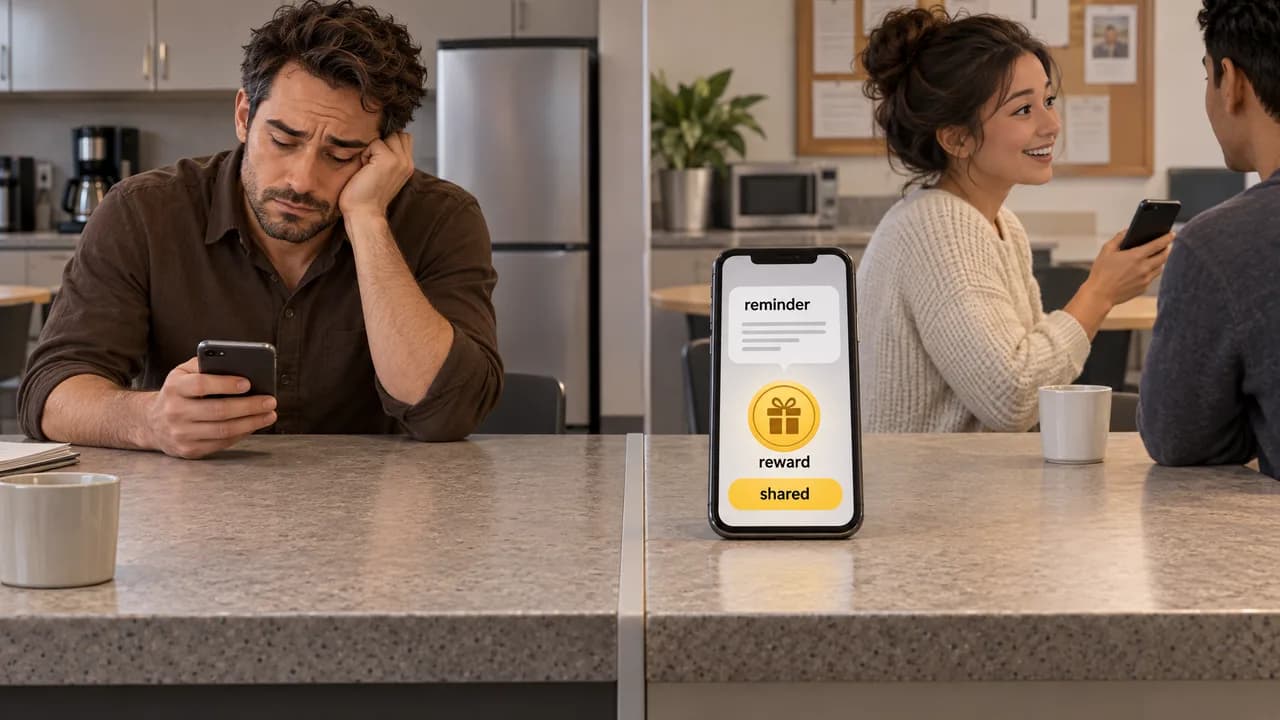
Gamifying employee social media sharing means using game mechanics like points, leaderboards, and rewards to motivate your team to share company content. This turns a business task into a fun, competitive team activity. The result is a powerful, authentic boost to your brand's organic reach. Platforms like ours, Buzz 52, automate this process with reminders and tracking to make it simple.
What Is Employee Social Media Gamification? The Tangible Business Benefits of Gamified Sharing How to Implement a Gamification Strategy in 5 Steps Buzz 52 in Action: A Real-World Use Case Gamification Platform Comparison: Buzz 52 vs. All-in-One Social Suites What Most Companies Get Wrong About Social Gamification Industry Benchmarks for Successful Programs Getting Started: Choosing the Right Plan for Your Team Frequently Asked Questions
What Is Employee Social Media Gamification?
Employee social media gamification applies game design elements to business processes. For social sharing, this means giving points for actions like liking or sharing a company post. These points feed into team leaderboards for social posts. Employees can earn rewards and public recognition.
This approach works because it taps into basic human motivations. A 2025 Gartner study noted that gamification can increase participation in workplace programs by over 60%. It moves the task from an obligation to a engaging challenge.
The core goal is to amplify your social media reach through your most trusted ambassadors. Your employees. When they share, their networks see it. This creates authentic word of mouth that advertising cannot buy.
What does it mean to gamify social media?
To gamify social media sharing is to add a layer of play. You set clear rules, a scoring system, and outcomes. Employees earn points for defined actions. They see their rank on a live leaderboard. They work toward tangible prizes or recognition.
This structure provides clarity and incentive. It replaces vague encouragement with a clear, rewarding system. The process becomes transparent and fair for everyone involved.
How does gamification change employee behavior?
Gamification changes behavior by making the desired action rewarding. According to research from the Harvard Business Review, immediate feedback and recognition are strong drivers. Seeing points add up after sharing a post provides that instant positive feedback.
Friendly competition via leaderboards also motivates. People naturally want to contribute to their team's success and see their own name climb the ranks. This turns passive observers into active participants.
The Tangible Business Benefits of Gamified Sharing
The benefits of a gamified program go far beyond just more shares. They impact marketing metrics, brand health, and internal culture. A 2026 Demand Metric report confirmed that content shared by employees receives 8 times more engagement than content shared by brand channels alone.
This massive engagement multiplier is the primary driver for businesses. Your content reaches new, trusted audiences without extra ad spend.
Why should companies gamify employee social media sharing?
Companies should do this for four key reasons. First, it dramatically expands organic reach. Each employee acts as a new distribution channel to their unique network.
Second, it builds brand authenticity. Content shared by a person is viewed as more genuine than content from a corporate account. Third, it increases overall content engagement rates through that trusted source effect.
Finally, it boosts employee morale and connection. A program that rewards engagement makes employees feel like valued partners in the company's growth. They become proud brand ambassadors.
What is the employee advocacy ROI?
The return on investment is clear and multi faceted. Beyond the 8x engagement lift, employee shared links drive higher quality traffic. MarketingProfs noted in a 2025 article that website traffic from employee shares can convert at a rate 5 times higher than other channels.
There is also a significant recruitment benefit. Potential candidates see an active, engaged team. This enhances employer branding. The cost for these benefits is often lower than sustained paid social campaigns.
How to Implement a Gamification Strategy in 5 Steps
Launching a program to gamify employee social media sharing does not need to be complex. A structured, five step approach ensures success. This template helps you move from idea to active program quickly.
1. Define Clear Goals and Metrics. Start with a specific target. Do you want ten shares per employee each month. Maybe you aim to increase total post reach by 50 percent. Choose one or two key metrics to track from the start. This focus prevents confusion.
2. Choose Your Game Mechanics. Decide how employees will earn points. Common actions are sharing a post, liking it, or commenting. Then, decide on the reward structure. Will you use a single leaderboard. Maybe you will have tiered rewards for different point levels. Keep the rules simple.
3. Select and Onboard Your Platform. A dedicated tool removes manual work. With Buzz 52, you get automated reminders and live leaderboards built in. The platform handles point tracking and contest management for you. Onboarding is about introducing the tool and rules to your team with enthusiasm.
4. Launch with a Kickoff Contest. Start with a short, high energy contest. A two week "launch challenge" creates immediate buzz. Communicate the rules, prizes, and start date clearly. Use email, team meetings, and internal chat to promote it. We support this with features for setting up prize contests and custom send schedules for reminders.
5. Analyze, Iterate and Reward. After the contest, review the leaderboards. See who participated and who won. Distribute prizes publicly to celebrate winners. Ask the team for feedback. Then, use those insights to adjust the next contest. The goal is continuous, sustained engagement.
How do you set up employee gamification?
You set it up by following the steps above and choosing a platform that does the heavy lifting. With our platform, setup takes under five minutes. You connect your social accounts, invite your team via email, and set your first contest rules. The automated system then prompts employees and tracks everything.
The technical barrier is very low. There is no need for IT support or complex integrations for the core gamification features. You can see a live demo of a running contest to understand the flow.
Buzz 52 in Action: A Real-World Use Case
Let's look at a specific example of a team using Buzz 52. A B2B software company has a marketing team of 25 people. They use our Grow plan to run their advocacy program.
They launched a monthly "Social Champion" contest. The automated reminders prompt the team twice a week with a link to the latest company post. A live leaderboard is embedded in their Slack channel. This lets team members see their rank in real time.
The winner each month receives a company branded prize and company wide recognition. The result is a consistent 95 percent participation rate across the team. They achieve this by using our features for unlimited social media posts and custom branding.
This use case shows the power of specialization. The platform is built for one job. That job is to gamify employee social media sharing effectively and simply. The team spends no time on manual tracking. They only focus on creating great content and celebrating wins.
Gamification Platform Comparison: Buzz 52 vs. All-in-One Social Suites
Choosing the right tool is critical. You must decide between a specialized gamification platform and a broad social media management suite. The table below highlights the key differences.
| Feature Aspect | Buzz 52 (Specialized Tool) | All-in-One Social Suites (e.g., Sendible) |
|---|---|---|
| Primary Focus | Gamified Employee Engagement & Advocacy | Broad Social Media Management (Scheduling, Analytics) |
| Key Gamification Features | Built-in Leaderboards, Rewards/Prizes, Automated Reminders | Gamification often a secondary feature within a larger toolset |
| Ideal Team Size | SMB to Enterprise (Scalable by team size) | Often geared towards marketing teams & social media managers |
| Pricing Model | Simple per-team/month pricing ($98/month for 6-49 users) | Typically per-user/month pricing, which can grow expensive |
All in one suites like Sendible position themselves as platforms to "manage your social media at scale." They are excellent for scheduling posts, publishing content, and viewing analytics across many networks. Employee advocacy is one feature among many.
Buzz 52 is built from the ground up for one purpose. We help you gamify employee social media sharing. Our features like live leaderboards and prize contests are the core product, not an add on. This focus makes the experience more engaging for employees and simpler for admins.
What is the best tool for employee social media gamification?
The best tool depends on your primary goal. If you need a full social media command center, a suite may fit. If your main objective is to boost employee sharing and engagement, a specialized tool like Buzz 52 is more effective. It provides a deeper, more engaging experience designed specifically for that outcome.
Forrester research has noted that focused applications often achieve higher adoption rates for their specific use case than broader platforms. This is because they remove complexity and highlight the desired user behavior.
What Most Companies Get Wrong About Social Gamification
Many programs fail to meet expectations. This is usually due to a few common mistakes. Recognizing these pitfalls early can save your program.
1. Focusing Only on Top Performers. Celebrating only the top three on the leaderboard discourages the middle 70 percent. The solution is tiered rewards. Offer recognition or smaller prizes for achieving a personal best or a team goal.
2. Using Generic, Unappealing Prizes. A generic gift card feels transactional. More meaningful rewards include company swag, an extra day off, or a donation to a charity the employee chooses. These create emotional connection.
3. Neglecting the 'Why'. Employees need to understand the business impact. Share success stories. Show how their shares generated leads or helped with recruitment. This connects their activity to company success.
4. Set and Forget Launch. A program needs maintenance. A industry research article on failed initiatives highlighted that lack of ongoing promotion is a major cause of decline. You must regularly communicate and refresh contests.
5. Overcomplicating the Rules. If the point system is confusing, people will not play. Keep it simple. One point for a share, one for a comment. Buzz 52 solves this by providing clear, automated leaderboards and simple nudges.
Why do employee gamification programs fail?
They fail when they feel like extra work without meaning. They fail when the rules are not clear or the rewards are not desirable. Most of all, they fail without consistent energy and communication from leadership. A platform that automates the tedious parts helps prevent this by keeping the game running smoothly.
Industry Benchmarks for Successful Programs
How do you know if your program is working. Use these industry benchmarks as a guide. They help you set realistic goals and measure performance.
According to Social Media Today, the average employee participation rate in advocacy programs was around 35 percent in 2026. This means just over a third of your invited team actively shares content.
High performing programs do much better. Data from the Edelman Trust Barometer suggests top programs can achieve 60 percent or higher participation. This is often a key goal for teams using dedicated software.
For posting frequency, a common benchmark is encouraging each employee to share about once per week. This is frequent enough to build a habit but not so much that it feels burdensome.
The ideal contest duration is typically two to four weeks. This is long enough to build momentum but short enough to maintain a sense of urgency. In our experience at Buzz 52, many of our customers see participation rates that exceed the 35 percent average benchmark.
What is a good employee social sharing rate?
A good rate is anything above the 35 percent average. Aiming for 50 to 60 percent active participation is an excellent target for a healthy, engaged program. This indicates your team finds value and enjoyment in the process.
Remember that quality matters as much as quantity. A few thoughtful shares with personal comments are more valuable than many automated reposts. Your benchmarks should encourage authentic engagement.
Getting Started: Choosing the Right Plan for Your Team
Our pricing is designed to be simple and scale with your team's size. There are no feature gates between plans. Every plan includes leaderboards, rewards, and automated reminders.
The Free Forever plan is for teams of 1 to 5 employees. It lets you test the core concepts of gamification with no cost or time limit. You can run contests and track points to see the potential.
The Grow plan costs $98 per month for teams of 6 to 49 employees. It includes all our features. This means unlimited posts, custom branding, prize contests with winner notifications, and full access to live leaderboards.
For organizations with 50 or more employees, we offer a Scale plan with custom pricing. This is based on your team size and specific needs. You can contact our team with questions for a tailored quote.
How much does employee gamification software cost?
Costs vary widely. Broad social suites often charge per user, which can become expensive for large teams. Our model at Buzz 52 is simple per team pricing. For most small and medium businesses, the $98 per month Grow plan provides everything needed to run a successful program.
This represents a clear, predictable investment. You can start with the Free plan to prove the value. Then, upgrade seamlessly when you are ready to include your whole team.
Frequently Asked Questions
Can you gamify employee social media sharing for free?
Yes, you can start for free. You can manually track shares in a spreadsheet and announce winners yourself. This takes considerable effort. For a more scalable and engaging solution, platforms like Buzz 52 offer a Free Forever plan for teams of up to five. This gives you automated tracking and leaderboards at no cost.
What are examples of rewards for employee social sharing?
Effective rewards include company branded merchandise, experience days like a paid lunch, charitable donations in the employee's name, and public recognition in company meetings. The best rewards feel personal and aligned with your company culture, not just a cash equivalent.
How does Buzz 52 differ from industry research Amplify?
Buzz 52 is a specialized platform built solely for gamified employee engagement and social sharing. Industry research Amplify is a feature within industry research's broad social media management suite. Our tool is focused on making sharing fun through leaderboards and contests. Their tool is part of a larger system for scheduling and analytics.
Is employee social sharing ethical?
Yes, when it is voluntary, transparent, and uses authentic content. Employees should never be forced to share. They should share content they genuinely find interesting or valuable. Clear guidelines and an opt in approach ensure the program is ethical and builds trust, not resentment.
How long does it take to set up a gamification program?
With a dedicated platform like Buzz 52, initial setup takes under five minutes. You connect your social accounts, invite your team via email, and configure your first contest. The longest part is often deciding on your contest rules and prizes, not the technical setup.
Do you need IT support to implement Buzz 52?
No. Buzz 52 is a cloud based SaaS application. It requires no technical integration, coding, or server management from your IT team. Employees join via a simple email link. Admins manage everything through a straightforward web dashboard.
Can gamification work for remote teams?
Absolutely. Gamification is highly effective for remote and hybrid teams. It creates a shared activity and sense of community despite physical distance. A live leaderboard provides a central point of connection and friendly competition that remote teams often lack.
Get new articles by email
New articles from Buzz 52, sent to your inbox.
By subscribing you agree to receive emails from Buzz 52 about new articles. You can unsubscribe at any time.