Employee Advocacy Tools Only Work When You Build a Sharing Habit
Most employee advocacy tools fail because they chase reach instead of building a sharing habit. Here's the framework for making advocacy stick.
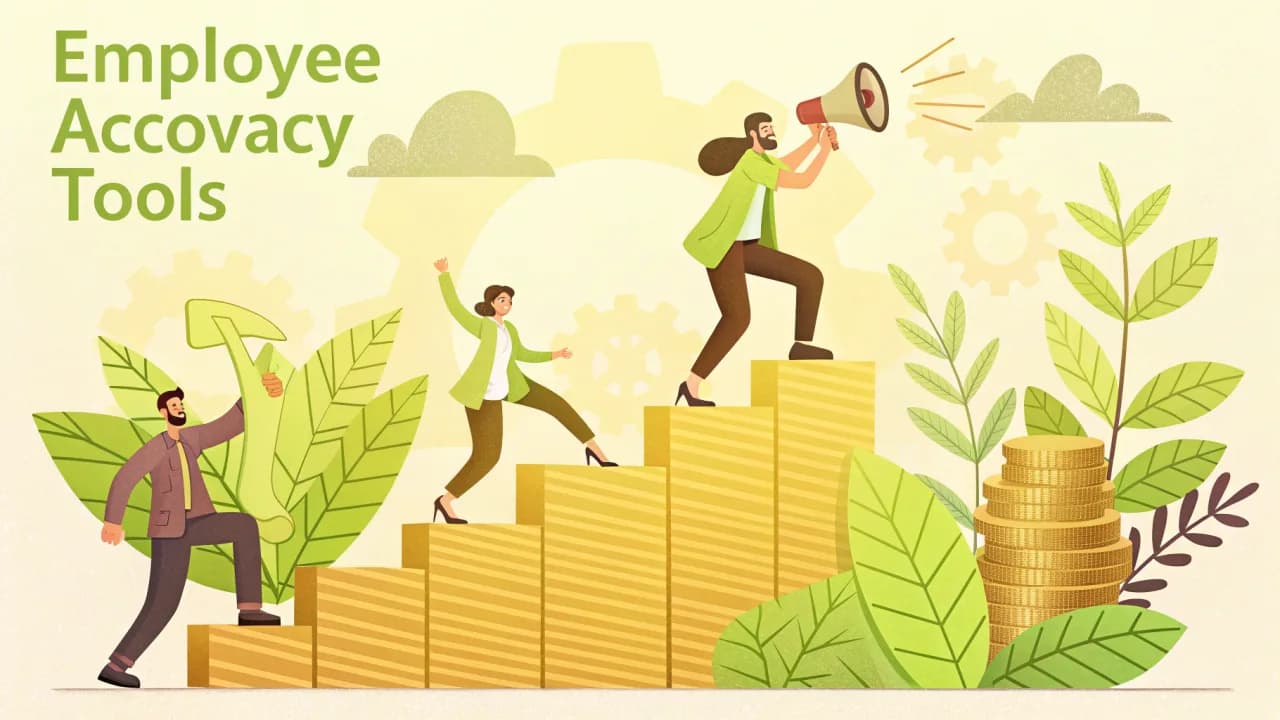
Employee advocacy tools fail for most teams because they solve a distribution problem while ignoring the deeper problem: behavior. A tool can put a post in front of every employee, but it cannot make them want to share it. The teams that win treat the software as the least interesting part of the equation. They build a routine around it.
Most programs start with a burst of enthusiasm. The launch email goes out, the leaderboard fills, and for two weeks everyone is a brand ambassador. Then the novelty fades, shares drop, and the dashboard becomes a graveyard of last-quarter activity. This is not a software failure. It is a design failure.
The fix is not a better algorithm or more points. It is a deliberate, repeatable rhythm that turns sharing from a chore into a reflex. That is the argument this article makes: employee advocacy tools work when they anchor a habit, and they fail when they merely broadcast.
The Short Answer
Employee advocacy tools are platforms that let companies distribute pre-approved social content to their workforce, so employees can share it through their personal networks with one click. The best ones add gamification, automated reminders, and rewards to keep participation steady. But the platform is only half the story. The other half is the routine you build around it.
A tool that reminds, rewards, and tracks is a means to an end. The end is a workforce that shares consistently because it has become part of how they work. When you evaluate any platform, ask whether it supports a weekly rhythm, not just whether it can push a campaign. Reach follows repetition.
What Employee Advocacy Tools Actually Do
Employee advocacy tools sit at the intersection of internal communications and social media marketing. They give marketing teams a way to turn employees into a distribution channel, while giving employees a low-friction way to share content that reflects well on them professionally.
The concept has a clear definition in the research. Internal communicators describe employee advocacy as a strategic program where employees share approved organizational content through their personal channels to extend brand reach, as Thelen documents in the Public Relations Review. It is not about forcing people to post. It is about removing the friction so that sharing the company's best thinking feels like a natural extension of their own professional voice.
This is distinct from adjacent ideas. Social selling is about generating leads. Employer branding is about attracting candidates. Employee advocacy, done right, is about amplifying the organization's voice through the most trusted medium that exists: a person's own network. The tool is the enabler, not the strategy.
The people it serves are broader than most assume. Marketing leaders want reach. HR wants engagement and a stronger employer brand. Operations wants a way to measure participation. A good platform has to serve all three, which is why the evaluation criteria below matter more than feature checklists.
How the Mechanics Work
The underlying mechanics are simpler than the marketing material suggests. A platform holds a library of approved content, schedules when employees see it, and tracks what happens when they share. The loop has four parts.
First, content curation. Marketing uploads posts, articles, and assets that have been vetted for brand safety. Employees never have to wonder whether something is appropriate to share, because the approval happened upstream. This is where the value of a controlled library becomes clear.
Second, distribution. The platform pushes a notification or reminder that new content is waiting. This is where timing becomes a real decision, not a default. A post that lands mid-meeting gets ignored. One that arrives during a natural lull, like a commute or a lunch break, gets shared. As Kofler notes in Advocacy in Neurology, advocacy in any field depends on the right tools reaching people at the right moment.
Third, action. The employee clicks, reviews, and shares to their chosen network. The best tools make this a single motion, not a copy-paste workflow. Friction is the enemy of participation.
Fourth, feedback. The employee sees their impact, through points, leaderboard position, or simple confirmation that their share mattered. This closes the loop. Without feedback, sharing feels like shouting into the void. With it, the behavior starts to reinforce itself.
None of this works if the employee shares once and never sees a reason to return. The mechanics create the possibility of a habit. Only the program manager can make it real.
The Right Way to Launch
Rolling out an advocacy program is a behavioral change project, not a software deployment. The sequence matters because each step builds on the last.
- Define the one metric that matters. Choose a participation rate, not a vanity reach number.
- Recruit a pilot group of ten to fifteen people who already post about their work. Their early activity will create the social proof that makes the wider launch credible.
- Launch with a contained, time-boxed campaign, not an open-ended mandate. A four-week push with a clear prize gives people a reason to try the behavior.
- Review the participation data and adjust the content mix. If the engineering posts get shared and the HR posts do not, make the calendar reflect that.
- Announce the permanent program with the pilot's results as evidence. Show the numbers, name the winners, and make the case that this is now a team norm.
The crucial step is the last one. A permanent program announced with real numbers lands differently than a vague invitation. People join movements they can see working.
This approach also makes the habit visible. When a new employee joins, they see their peers sharing and understand the expectation immediately. Culture is caught more than it is taught.
What to Look For in a Tool
Evaluation criteria matter more than the demo. Every platform in this category can show a leaderboard and a rewards page. Few can show you whether their design actually produces sustained participation. Judge them on these dimensions.
- Reminder architecture: Does the tool nudge automatically, or does it depend on the manager to chase people? Automated reminders that arrive on a schedule you set are the difference between a program that runs itself and one that dies on your desk.
- Reward mechanics: Are rewards meaningful enough to matter but not so valuable they feel like a bribe? The sweet spot is recognition that has social value, a lunch, a shoutout, a small prize, not cash that feels transactional.
- Content flexibility: Can you send unlimited posts, or does the pricing tier cap you? A tool that limits how much content you can push will force you to ration your own strategy.
- Branding control: Can you put your company logo on the employee-facing pages? If the tool looks like a generic SaaS product, employees will treat it like one more piece of corporate software.
- Schedule control: Can you set exactly when reminders go out? Timing is the hidden variable in participation. A tool that only sends immediately at publish time ignores everything we know about attention.
The trade-off most articles skip is simplicity versus configurability. A simple tool gets adopted but may not grow with you. Decide which failure mode your team can tolerate before you buy.
Pricing should follow team size, not feature limitations. If a platform charges you more for basic functionality instead of for scale, walk away. Your cost should scale with your headcount, not your ambition.
Mistakes That Undermine the Program
The fastest way to kill an advocacy program is to treat it as a broadcast channel. When the tool is used to push every corporate announcement, employees tune out within a month. The platform becomes internal spam, and the habit dies before it forms.
A subtler failure is rewarding volume over judgment. If the leaderboard only rewards the highest share count, you get employees blasting every post without reading it. That inflates your numbers while degrading your brand, because your own people are promoting content they have not actually vetted. Rewards should encourage consistency, not mindless volume.
Another trap is the launch-and-abandon pattern. The program starts with a splash, a kickoff event, and a prize. Then the manager moves on to the next initiative and the reminders stop. Employees infer that the program was a stunt, not a priority, and they stop sharing. Consistency from leadership is the only thing that signals permanence.
The most expensive mistake is ignoring the reluctant majority. Advocacy programs often celebrate the ten percent who share constantly and write off the rest. But the long tail of occasional sharers is where the true reach lives. A program that only works for the already-engaged has failed its main job.
Finally, do not treat the tool as the accountability mechanism. If the only consequence of not sharing is a low leaderboard score, nothing changes. The habit has to be tied to team culture, not the dashboard.
When This Approach Is Right for You
This approach works when you have a workforce that already has a professional reason to be online. Sales teams, consultants, recruiters, and marketers naturally maintain LinkedIn presences. For them, an advocacy program is a multiplier, not an imposition.
It struggles when your workforce has no professional social presence to begin with. Factory workers, retail staff, and many frontline teams do not live on LinkedIn. Asking them to become brand advocates is asking them to build a new identity, not amplify an existing one. In that case, focus the program on the subset of employees who do have a presence, and leave the rest alone.
You also need leadership buy-in that survives the first quarter. If the executive sponsor treats this as a one-off campaign, the program will fail no matter how good the tool is. The habit only forms when someone is accountable for keeping it alive.
The right signal to evaluate is simple: is your team already sharing occasional company content without being asked? If yes, a tool will multiply that behavior. If no, the tool will not create it. Fix the culture before you buy the software.
How We Handle This
We built Buzz 52 around the habit problem, not the distribution problem. Our platform gamifies employee engagement with leaderboards and rewards, because we believe the tool's job is to make the behavior sticky, not just possible.
The features that matter for this exact challenge are the ones that build rhythm. Our automated reminders take the manager out of the nagging business, pinging employees on a custom send schedule you control. The live leaderboards and point tracking give people immediate feedback on their impact, which is what turns a single share into a recurring one.
We keep the setup simple, under five minutes, because we know the launch window is where programs live or die. Custom branding and your company logo put the program inside your culture, not alongside it. And our pricing scales with your team size, from a free tier for up to five employees upward, so you are not paying more just to access standard features.
The habit is the product. The software is just the reminder that makes it possible. If you want to see how the rhythm works in practice, it is worth reading how rewards that do not feel bribed change participation, or how gamification stacks up against traditional advocacy for sustained engagement.
Related reading
- Employee Advocacy Platforms: Why Points Alone Won't Move the Needle
- Employee Social Media Gamification Platform vs. Traditional Advocacy: Which Wins?
- Employee Advocacy Platform with Custom Schedules: Why Timing Matters for Social Amplification
Frequently Asked Questions
What are some effective tools for advocacy?
Effective tools make sharing effortless and rewarding. Look for platforms that offer automated reminders, so employees never forget there is content waiting, and leaderboards that make participation visible. Prize contests with automated winner notifications add a layer of motivation beyond points. The tool that fits your team's rhythm is the effective one.
What are the 5 steps of advocacy?
The advocacy cycle runs through five phases: curate content that is safe and relevant, distribute it on a schedule that respects attention, make the sharing action frictionless, reward participation consistently, and measure the impact to justify continuing. The first four build the habit, and the fifth builds the case. Notice that software only automates the second and third steps. The rest is program management, which is why the tool alone never delivers results without a human running the loop.
What are the four types of advocacy?
Advocacy breaks into four distinct categories: employee advocacy, where staff share company content; customer advocacy, where happy clients promote your product; partner advocacy, where channel partners amplify your message; and community advocacy, where enthusiasts and fans carry your brand. Employee advocacy tools typically focus on the first category, but the best platforms borrow mechanics from the others, especially the recognition loops that drive community advocacy. Understanding which type you are trying to spark clarifies which tool features actually matter.
Get new articles by email
New articles from Buzz 52, sent to your inbox.
By subscribing you agree to receive emails from Buzz 52 about new articles. You can unsubscribe at any time.