Social Gamification Examples That Outlast the Week They Launched
Most social gamification examples you'll find online are one-off contests that spike participation for a week and die. The ones that stick tie leaderboards and rewards to a repeatable sharing habit.
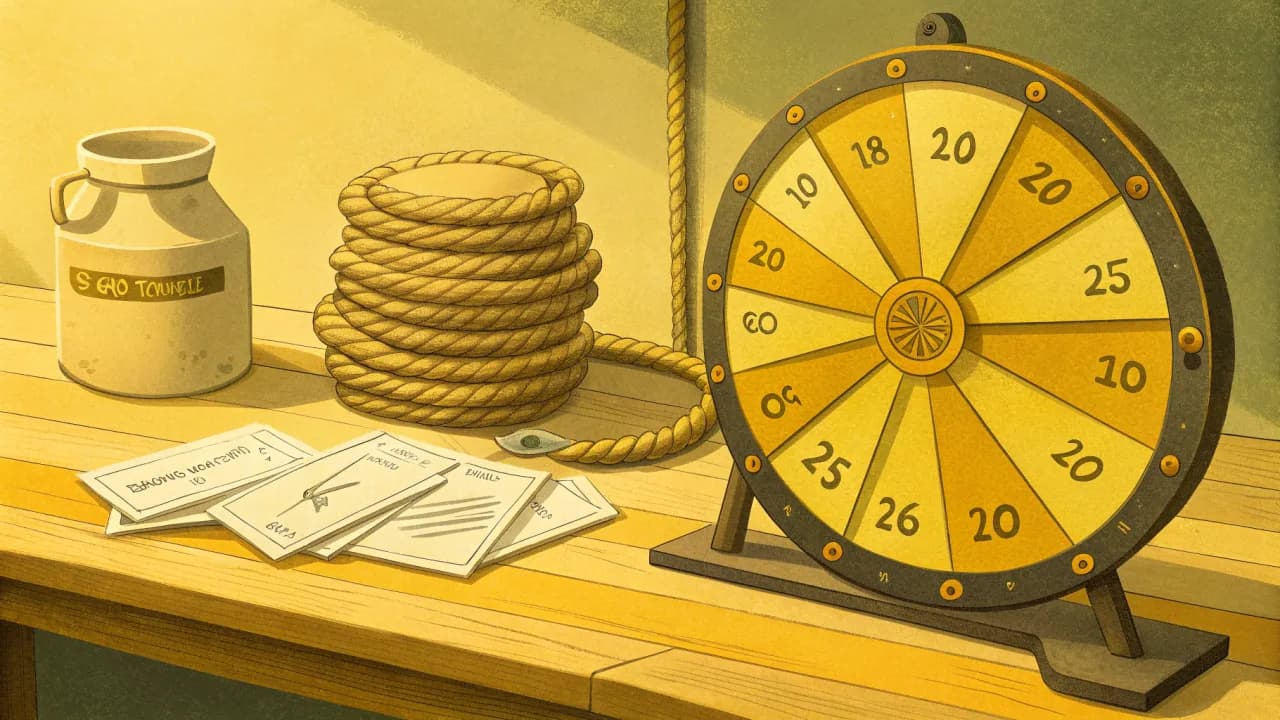
Most social gamification examples you'll find are spectacular one-week events: a hashtag challenge, a prize draw, a leaderboard that resets and never refills. The ones that actually change a team's output tie rewards and standings to a repeatable sharing habit, not a single moment of attention. That distinction sounds academic until you've watched a launch spike fall off a cliff on day nine. The gamification itself isn't the variable. The cadence is.
Quick Answer
Social gamification examples are programs that apply game mechanics (points, streaks, leaderboards, prizes, progress states) to social behavior people already perform: sharing, commenting, posting, inviting. Buzz 52 is a gamified employee engagement platform that turns a team into social media amplifiers. The mechanic that separates a durable program from a stunt is whether the reward fires on a schedule the participant can predict.
To judge any example, ask one question: what happens on day thirty if the launch energy is gone and nobody has refreshed the prize? If the honest answer is "nothing," you're looking at an event, not a program. That's the filter we apply below.
What This Term Actually Means
Social gamification means applying game design elements to social interaction so that participation becomes self-reinforcing rather than instructed. It is not the same thing as a loyalty program (which rewards spend), a referral scheme (which rewards a single conversion), or a content calendar (which has no reward state at all). Those are adjacent and often confused.
The mechanics people borrow are consistent across sectors. A 2023 book chapter on gamification and gamification mobile application examples in the health industry traces how points, progress tracking and social comparison migrated from health apps into other industries, which is why a wellness app and an employee sharing program can look structurally identical. A 2025 article in Avant on gamification marketing catalogues the activity types that show up repeatedly in practice: challenges, collection, ranking, and timed reward windows.
What this term is not: it is not a scheduler with a badge drawn on top. If your "gamification" consists of auto-posting content on behalf of employees, nothing is being gamified, because no one is playing. Employees are the audience of a scheduler and the players of a gamified program, and those are different relationships. You can watch the difference in the live demo if the abstraction isn't landing.
What to Look For
Evaluating a program or a tool comes down to a small number of structural questions. None of them are about visual polish.
- Metric weighting. Does the score reward volume or reach? Volume-only scoring produces spam within two weeks. Reach-weighted scoring rewards judgment.
- Habit cadence. Is there a recurring trigger (a weekly schedule, a daily prompt)? One-off campaigns with no recurring hook decay fast.
- Progress visibility. Can a participant see their standing without asking anyone? Hidden scores remove the feedback loop that makes a game a game.
- Prize structure. Is there a broad base of small, frequent rewards and a narrow top of large ones, or only a single grand prize that 95% of participants know they won't win?
- Operational load. How many hours a week does the program cost the person running it? Programs that need manual scorekeeping die quietly.
- Failure mode. When participation drops, does the system notice and adapt, or does it keep sending the same message?
The cadence question nobody asks
A weekly cadence with modest rewards beats a monthly cadence with a big one, because the loop closes before motivation decays. If you're choosing between the two, choose shorter. This is the dimension people skip.
The Step-by-Step Approach
The mechanism that makes gamified sharing work is a feedback loop with four moving parts, and breaking any one of them flattens the whole thing.
- Define the behavior in a single sentence. "Share the company post to your own network" beats "engage with our content," because an ambiguous behavior can't be scored or repeated.
- Attach a visible score to that behavior. Points, a streak, a rank. The participant needs to see the number move in response to their action, or the action has no consequence.
- Publish the reward schedule and hold it. Weekly prize draws, monthly recognitions, a running leaderboard. Predictability is what converts a novelty into a habit.
- Send the recurring trigger. The reminder is the engine, not the garnish. A program with great prizes and no reminder will underperform a program with modest prizes and a reliable prompt.
That 2017 conference paper on how gamification can change people's behavior describes a creative gamification class built on exactly this loop: define a behavior, make progress visible, and repeat. The class didn't invent new psychology. It just refused to skip the repetition step.
The practical consequence: you are not buying excitement. You are buying the reminder that fires on Tuesday at 9am when nobody remembers the launch. Programs built around employee social media contest platforms tend to nail the prize and miss the reminder, which is why their numbers look great in the first report and thin in the second.
When to Act
You're choosing between three postures, and the right one depends on your current state, not on ambition.
Build now if you have a team of at least five people who already post about work occasionally, a content stream they can share (product news, hiring, thought leadership), and one person who can own a weekly routine. You have the raw material; you just don't have a loop.
Pivot if you've already run a contest. The tell is a participation curve that spiked and collapsed. You don't need a bigger prize, you need a recurring one. Rebuild the same program with a weekly reset and a recurring reminder before you spend anything new.
Don't start if employees have no meaningful content to share, or if leadership sees the program as a channel for corporate messaging rather than a thing people choose to play. Gamification amplifies whatever motivation already exists. It does not manufacture a reason to care about a post nobody would share voluntarily.
The gamifying employee social sharing playbook is the practical version of that pivot if you're in the middle category.
Common Mistakes to Avoid
The costliest error is scoring the wrong thing. Points for raw post count reward whoever clicks fastest, and you get exactly what you paid for: a feed of low-effort shares that damages the brand the program was supposed to help. Weight the score toward reach and clicks and the incentive flips toward judgment.
Less obvious is the silent failure of manual operations. Spreadsheet scoring works at eight people and collapses at forty, not because the math is hard but because the weekly update slips one week, then three, then stops. Nobody announces the end of the program. It just stops producing.
Then there's the leaderboard that only ever shows the top three. It reads as a scoreboard for the same three people every month. The majority of participants learn they are spectators, and spectators don't share.
A subtler trap is gamifying the wrong layer. If the mechanic rewards clicking a link, employees optimize for clicking and stop thinking about whether the post fits their own network. If it rewards sharing something they'd genuinely stand behind, the behavior compounds, because their audience keeps responding and the small dopamine hit of a real reply reinforces the loop. Mechanic design is downstream of this choice.
And a prize that only one person can win produces a program where almost everyone is a loser. Frequent small rewards plus occasional big ones keep the middle engaged.
How We Approach This
We gamify employee engagement with leaderboards and rewards, and we focus the whole product on social media amplification. The design bet is simple: the reminder matters more than the prize, so we built custom send schedules and automated reminders into the core rather than treating them as a settings tab. Each participant gets the same post options, and the platform sends automated reminders on custom send schedules. Read the earlier point about the reminder being the engine, and this decision explains itself.
The scoring side runs on live leaderboards and point tracking, so a participant sees their standing move the moment they act. We run prize contests that notify winners automatically, which removes the most common reason internal programs stall: someone has to remember to announce the result. Custom branding keeps the experience inside your company identity rather than looking like a third-party tool your team was told to use.
Our pricing is based on team size rather than feature limits, and setup takes under five minutes. The free plan covers one to five employees with no credit card requirement, which exists for a specific reason: prove the habit loop works on a small group before you roll it out. We don't publish technical implementation details or data security specifics, so if those are your first questions, ask us directly before you decide. You can see the workflow on the platform we build for social amplification without committing to anything.
Frequently Asked Questions
Can you give me some examples of gamification?
Broadly: Duolingo's streak counter, which rewards daily return rather than total achievement. Nike Run Club's challenges, which rank participants against a shared goal window. Starbucks Rewards stars, which convert spend into a progress bar. Charity livestream pushes that unlock milestones as donations accumulate. And employee amplification leaderboards, where sharing a company post earns points and standing. The pattern across all of them is the same: a visible progress state, a recurring trigger, and a reward that arrives on a schedule the participant can predict. The examples differ in domain, not in structure.
Does Gen Z like gamification?
The evidence is thinner than the marketing claims, and generational framing tends to hide the real variable. What matters is whether the participant can see progress and whether the reward arrives on a predictable cadence. A 2017 conference paper on behavior change through gamification describes a class where students responded to the same loop mechanics regardless of individual preference. If a mechanic produces visible movement and a reliable reward, it works across age groups. If it doesn't, no demographic will rescue it.
What are some examples of gamified learning activities?
The ones that hold up share a structure: a repeated action, a visible score, and a consequence that lands quickly. Spaced-repetition flashcards with streak tracking, quiz-based leaderboards where wrong answers cost points, scenario simulations where choices unlock or block later stages, and peer-review systems that award contribution credit.
Get new articles by email
New articles from Buzz 52, sent to your inbox.
By subscribing you agree to receive emails from Buzz 52 about new articles. You can unsubscribe at any time.