Social Media Gamification Ideas That Hold Up Past Launch Week
A one-off contest spikes once and dies. A gamified sharing program that runs on a fixed weekly schedule keeps producing because the mechanism, not the prize, drives participation.

The social media gamification ideas that work are the ones tied to a repeatable weekly schedule, not a one-off contest: automated reminders, points per verified share, a live leaderboard, and a prize cycle that ends and restarts. A contest spikes once and dies with the announcement email. A scheduled loop keeps producing because the score resets against a deadline your team can see.
That distinction sounds small until you watch a launch campaign and a running program side by side. The campaign depends on novelty. The program depends on mechanics.
What Actually Moves When a Team Shares on a Schedule
Gamification works by attaching a score and a deadline to an action your team would otherwise do inconsistently. That is the whole mechanism, and it explains why the format of the loop matters more than the size of the prize. A 2019 preprint on gamification and social media engagement treats points, badges, and leaderboards as the structural layer that converts a routine action into a scored one. Strip that layer out and you are left with a polite request in a Slack channel.
Four components do the work, and each one fails on its own if the others are missing.
The trigger. A post goes live at a time your team expects. If the ask arrives at random, participation depends on who happened to see the message. Random timing makes the marginal cost of joining unpredictable, and unpredictable costs get ignored.
The score. Every verified action adds points. Points need to land immediately. A scoreboard that updates overnight tells the participant their action did not register, which is functionally identical to a broken link.
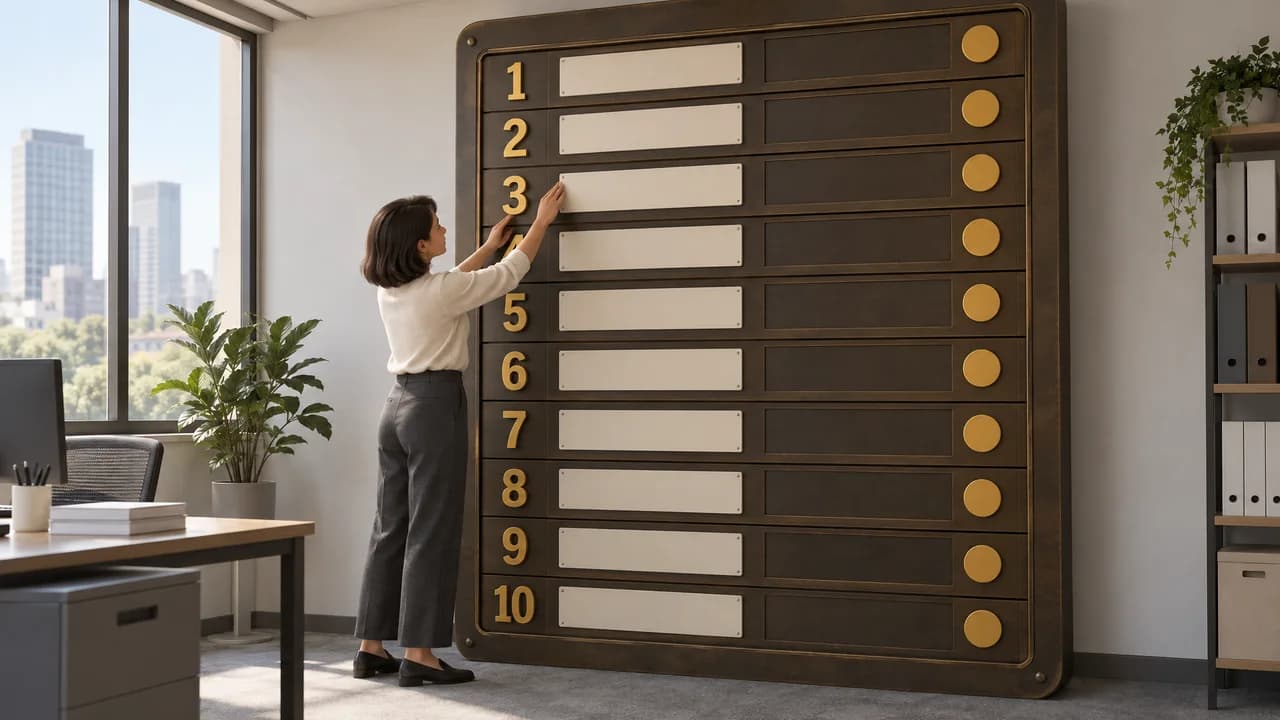
The visible standing. A leaderboard turns individual points into a shared fact. People who can see where they sit adjust their behavior toward the next rung. People who cannot see it treat the whole thing as an abstraction.
The reset. A prize cycle has a start and an end. The end matters more than the prize, because the reset gives a trailing participant a reason to re-enter instead of writing off the season.
Point tracking, reminder delivery, and prize notifications are plumbing, which is exactly why they deserve attention before you pick a theme or a hashtag. If you manage social accounts across multiple clients or channels, our free tools for social media managers handle the audit side of that; the engagement loop itself needs a system that sends, scores, and notifies without a human in the middle.
Why the Contest Model Collapses After Launch Week
A branded contest and a gamified sharing program look the same in week one. They diverge in week three, and the cause is structural rather than motivational.
Contests end by design. The announcement, the entry window, and the winner post are one arc, and once the arc closes, the behavior it produced has nothing left to attach to. Restarting it requires a new announcement, a new theme, and a fresh round of internal promotion. That overhead is why most teams run two or three contests a year and wonder why sharing is inconsistent.
Open-ended programs fail differently. When points accumulate with no reset, whoever built an early lead stays on top, and everyone below them stops competing for a position they cannot reach. The leaderboard that motivated the top five demotivates the bottom twenty.
Manual coordination fails a third way. A shared spreadsheet and a group chat can carry a program for a few weeks, then a holiday week arrives, nobody posts the reminder, and participation drops to whoever remembers the routine. The program did not lose its appeal. It lost its trigger.
All three failures share one cause: the cadence was tied to enthusiasm instead of a calendar.
Building the Weekly Loop
The loop is a sequence, and each step feeds the next one's input. Build it in this order.
- Fix the send schedule first. Choose the days and times your posts go live, then let everything else key off that calendar. A schedule you can repeat in a quiet week is worth more than an aggressive one you can hold for a month.
- Write the reminder so the action is one click. The reminder carries the post, a link, and the point value. Anything that requires a second step leaks participants at the exact moment they were willing.
- Score the action the moment it is verified. Points land in the same session as the share. If verification takes an hour, the feedback loop is broken and the participant learns that sharing does not produce a result.
- Show the standing to everyone. Publish the leaderboard where the whole team sees it, not in a private dashboard only managers open. Visibility is the competitive ingredient.
- Set the prize cycle to a fixed period, then honor the close. Weekly or monthly both work. What does not work is a cycle with a soft end, because the reset is the only thing that brings a trailing participant back.
- Announce the winner and restart immediately. The moment between the close of one cycle and the open of the next is where momentum drains. Put the new cycle's first reminder in the same message as the winner announcement.
Two details separate a loop that runs for a year from one that runs for a quarter. Vary the prize type across cycles while keeping the cycle length constant, because the schedule is what people adapt to and the prize is what keeps the top of the board engaged. And keep the point values simple enough that a participant can do the math in their head. A scoring system nobody can predict produces accusations of favoritism even when it is perfectly fair.
The Errors That Kill Participation
Lag between action and score is the error that does the most damage, because participants read it as a verdict on their effort. A share that does not move the number within the same session teaches the team that the program is decorative. Fix it by scoring verification, not intention: the point lands when the post is confirmed live, and it lands in the same notification that confirms it.
Prize thresholds set for the top performer leave most of the team with no realistic target. If first place is mathematically out of reach by the second week, the program has one competitor and a watching audience. Structure tiers so a participant joining mid-cycle can still reach something meaningful by the close. Rewards that only the leader can win convert a team activity into a spectator sport.
Leaderboards that never reset punish anyone who missed the first week. Carry-over points are comfortable for the incumbent and discouraging for everyone else. A fixed reset is not a flaw in the design; it is the feature that makes the next cycle worth entering.
Confusing a one-time push with a program shows up in the reporting before it shows up in the numbers. If the calendar has one entry and no next date, you have a campaign, and campaigns end. The remedy is administrative rather than creative: put the first four cycles on the schedule before you launch the first one.
Treating the prize as the engine is the error that hides longest. The prize recruits the first participants. The schedule, the score, and the reset are what keep them. Teams that double the prize budget without fixing the cadence usually get the same participation at twice the cost.
What the Numbers Show About Employee Reach
Reach is where the argument stops being about morale. Employee posts reached an average of nearly 900,000 impressions on LinkedIn, according to SocialPubli's 2025 Employee Advocacy Benchmark Report. That figure describes aggregated employee posting activity at scale, not a single team's share of it. The strategic read is what matters: the impressions come from individual accounts, which means your brand account's reach is not the ceiling on your program's reach.
That reframes how you measure the loop. Post volume tells you whether reminders went out. Impressions and clicks tell you whether the program moved anything. A team of twenty sharing four times a week produces more distributed activity than most brand accounts can generate alone, and the network effect compounds when the same people post consistently rather than in bursts.
For a first-cycle point of comparison, benchmark against your own baseline. Pull last month's reach from your brand accounts, then compare it to the same window once the loop is running. That comparison is honest in a way a platform average is not, because it isolates your program from your existing performance.
How We'd Run This for Your Team
Buzz 52 is built for exactly the loop described above. Our category is employee engagement software, and the job is narrow on purpose: we gamify employee social sharing with leaderboards and rewards, so your team posts consistently instead of in bursts. Automated reminders go out on a schedule you set, each one carrying the post and the point value. Live leaderboards and point tracking update as shares are verified. Prize contests close with winner notifications, so the reset happens without anyone rebuilding the program by hand. Custom branding puts your logo and colors on the team-facing pages, and you can send unlimited posts on your own schedule.
Setup takes under five minutes, which matters more than it sounds. A program that requires a project to launch never launches. If you want to see what the loop looks like populated with your industry's numbers, our examples page shows running programs rather than describing them.
Who should look elsewhere: if your goal is broader employee recognition, pulse surveys, or internal communications rather than social amplification, a general engagement platform fits that brief better, and we do not try to cover it. Our scope is social media amplification for employee engagement. Pricing scales by team size rather than by feature, so a five-person team gets the same capability set as a larger one. Start on the free tier with up to five employees, no credit card needed, or talk to us about a team rollout through our contact page.
Frequently Asked Questions
What is the 5 5 5 rule on social media?
It is a posting cadence guideline, not a platform rule: five posts a week, at least five hours apart, with five minutes spent engaging on other accounts between your own posts. The numbers are a mnemonic for consistency rather than a setting hidden in any app. Applied to an internal sharing program, the useful part is the spacing, because it forces a schedule instead of a burst. A team that shares five posts across a week stays visible in more feeds than a team that shares the same five posts on Monday afternoon.
What are some fun games I can play on social media?
The games that hold up are short, scored, and repeatable: a weekly race to the most verified shares, a first-to-respond challenge where the first person to engage with a new post earns bonus points, and a team total goal that unlocks a shared reward once the group clears a threshold. Team goals work well alongside individual leaderboards because they give participants who will not place individually a reason to keep posting. Pick two formats, not five, and run them on the same cadence each week.
What are some ideas for interactive social media posts?
Interactive posts ask for an action the audience can complete without leaving the feed: a poll between two product options, a question that invites a one-word reply, a caption fill-in, or a photo prompt tied to a season or event. For employee-facing programs, the interactive element is the scored share itself, since each verified post is an action the system can confirm and reward. Pair one interactive format with one plain share per cycle so the schedule stays easy to hold.
What are the key gamification trends for 2026?
The shift that matters is away from isolated contests and toward always-on loops with recurring cycles. Teams are moving point systems out of spreadsheets into tools that score and notify automatically, because manual tracking collapses the moment someone goes on vacation. Leaderboards are getting shorter, often scoped to a week or a month, so the reset keeps trailing participants in the game.
Sources
- agilitypr.com
LinkedIn stands out as the dominant platform, with employee posts reaching an average of nearly 900,000 impressions.
Sources checked on October 8, 2026.
Get new articles by email
New articles from Buzz 52, sent to your inbox.
By subscribing you agree to receive emails from Buzz 52 about new articles. You can unsubscribe at any time.