Social Media Amplification for Small Business: Build a Real Engine, Not a One-Off Boost
Social media amplification for small business is more than paid ads or reposting. The most powerful and cost-effective channel is employee advocacy, but it requires a structured system with gamification to deliver sustained results.
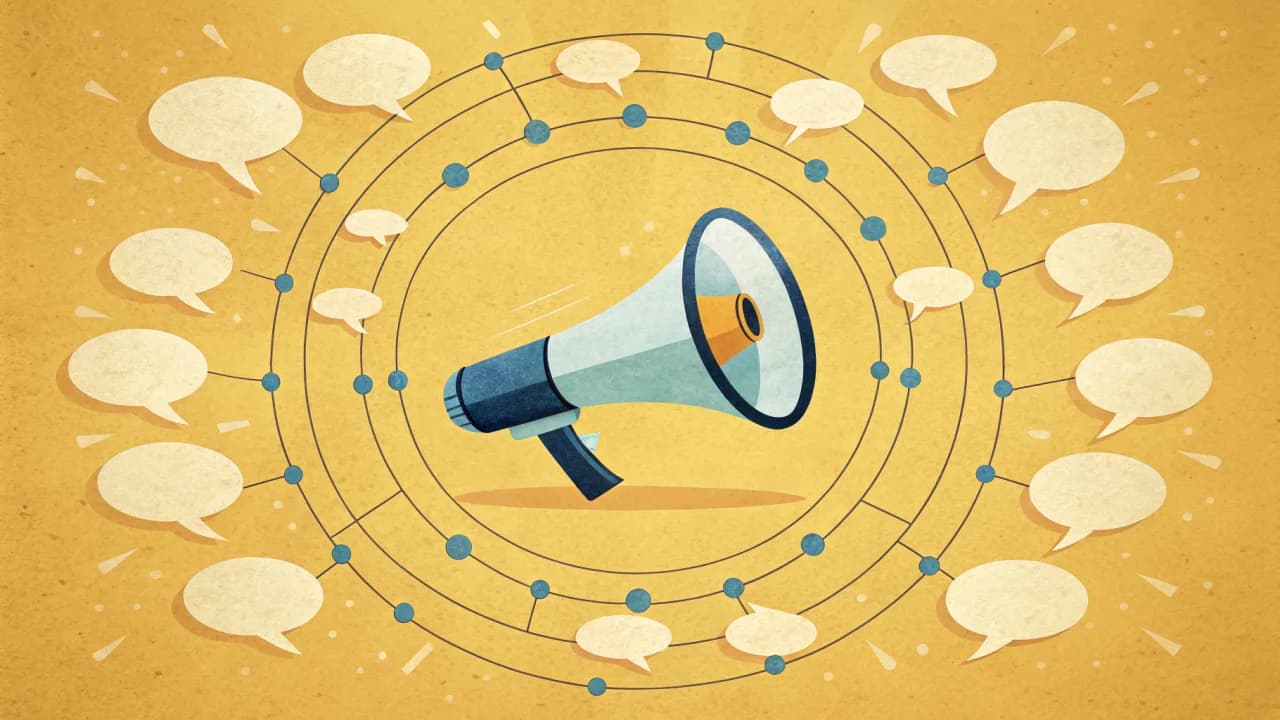
Social media amplification for small business means extending your content's reach beyond your own followers by combining paid promotion, content repurposing, and activation of your team's networks. Too many small businesses treat amplification as a single weapon, spending on a boost or asking employees to share once. The real advantage comes from a coordinated system that keeps distributing your message across multiple channels, with employee advocacy as the engine that scales your reach at near-zero incremental cost.
More than three-quarters of small- and medium-sized businesses agree that social media positively impacts their business performance, per the Sixth Annual State of Small Business Survey from Verizon Business and Morning Consult. Yet most leave massive reach on the table by sticking to a single amplification tactic. Here is the system that actually works for a team of 5 to 50.
What Is Social Media Amplification for Small Business?
Start with a straightforward definition. Social media amplification is the process of extending the distribution of your content beyond the audience that already follows you. For a small business, that means using paid boosts, content repurposing across platforms, and tapping into the networks of employees and customers to increase reach, engagement, and conversions.
The reason this matters specifically for small teams is that organic reach on brand pages has declined sharply. A post on your company Facebook page reaches maybe 2-5% of your followers. To get your message in front of a meaningful audience, you need distribution vectors that operate outside the platform's personal feed algorithm.
Those vectors come in three forms: putting money behind the post, repackaging the content for different platforms so it earns distribution multiple times, and convincing other people to share it to their own networks. The third one, people-led amplification, is the most cost-effective and most underused by small businesses.
The Core Channels of a Small Business Amplification Strategy
Three channels make up the foundation of any effective amplification playbook. Each has a specific trade-off that a small business needs to understand before investing time or money.
Paid Amplification: Speed Without Sustainability
Boosting a post or running a targeted ad gives you immediate reach. The algorithm prioritizes content that receives paid distribution, so your post gets into feeds quickly. The trade-off is simple: reach stops the moment you stop spending. For a small budget, paid amplification works best as a tactical tool to extend the life of content that is already performing organically. Do not use it as your primary distribution strategy or you will burn money maintaining the same reach level week after week.
Owned Content Repurposing: Create Once, Distribute Everywhere
A small bakery shoots a 30-second short-form video showing the process of frosting a cake. That same clip goes on TikTok, Instagram Reels, and Facebook. It becomes a paid ad variant. It gets embedded in a blog post. The content is created once and earns distribution across multiple platforms and formats. This is the most time-efficient way to get more mileage out of limited content production capacity.
Employee Advocacy: Your Team as Trusted Amplifiers
When an employee shares your content to their personal LinkedIn, Facebook, or Twitter, that post reaches their network, often thousands of people who are not following your brand page. More importantly, it arrives with the implicit trust of a known connection. Click-through rates on employee-shared content are significantly higher than on brand-shared content. The challenge is making sharing easy enough and motivating enough that employees do it consistently. That is where a structured system with gamification becomes essential.
Four Paths to Social Reach, and When Each Fits Your Small Business
Not all amplification is created equal. You can classify amplification strategies by where the distribution energy comes from. Understanding these four types helps you pick the right one for your team size and budget.
Budget-Led Amplification
You spend money to place content in front of an audience. Fast results, predictable costs, but zero lasting value when the budget runs out. Best for product launches, limited-time promotions, or testing a new audience segment. Works for any business with ad spend capacity, but the ROI drops if you lack a strong organic seed.
Content-Led Amplification
You invest time in creating content that earns its own distribution through SEO, shares, and platform algorithms. Think blog posts that rank for search terms, short-form videos that get recommended, or infographics that get embedded. Requires consistency and patience. The compound effect is real: a single evergreen article can drive traffic for years. But for a small team with limited creation bandwidth, this requires ruthless prioritization of one or two content formats.
People-Led Amplification
You activate your team's social networks. Each employee becomes a distribution channel. The combined reach of a 10-person team sharing a post can dwarf the reach of a $500 ad campaign, with the added benefit of higher engagement rates. This is where small businesses have a natural advantage: their teams are lean enough to coordinate easily, and the social graphs of 6-49 people in a specific industry create a targeted, high-trust reach halo.
Community-Led Amplification
Your customers and fans share your content because they genuinely value it or want to support your business. UGC, reviews, testimonials, and referral programs fall here. Low cost, high authenticity, but hard to scale without a deliberate incentive structure. This works best as a complement to people-led amplification, often triggered by the same team members who first share the content.
The non-obvious insight: People-led amplification scales differently than budget-led because the social graph of a small team, combined with their extended networks, often rivals a modest ad budget in genuine reach while converting at higher trust rates. A concrete example: TikTok is a platform where this dynamic plays out. According to an Oxford Economics report cited by the SBE Council, 88% of small businesses reported increased sales following TikTok activity, and 33% currently use the platform. Employee shares on TikTok, LinkedIn, and Instagram multiply that effect further.
Relying on a single social media expert to manage all amplification is a mistake. The best strategy distributes the amplification workload across the team and across channels.
A Step-by-Step Framework to Build Your Amplification Playbook
A playbook turns theory into action. Here is a five-step process that works for a small business with limited time and budget.
First, audit your current content performance. Identify the one organic post that earned disproportionate engagement in the last 30 days. That post is your seed. Do not start with a new piece of content, amplify what is already working.
Second, decide which amplification channel matches your team size and resources. If you have 5 or more employees, people-led amplification should be your primary vector. If you are a solo operator, focus on content repurposing and a small paid boost.
Third, activate the amplification source. For people-led, that means setting up a tool that provides automated reminders and pre-approved share messages. Employees should be able to share the content with one or two clicks, without having to write their own post. The lower the friction, the higher the participation rate.
Fourth, layer a small paid boost onto the same organic performer. Use the boost to test the reach ceiling, increase the budget incrementally until you see diminishing returns per dollar. Measure by the number of clicks to your landing page or signup form, not by likes or comments.
Fifth, measure by concrete outcomes. Link the amplified content to a landing page tracking leads or sales. Avoid vanity metrics like impressions without engagement. The Small Business Administration and Meta Business provide guidance on audience targeting and content testing that fits this workflow.
The framework works because it prioritizes the content that has already earned distribution, then uses the most appropriate channel to multiply that reach. It avoids the common trap of amplifying the wrong content.
Why Employee-Shared Content Consistently Outperforms Brand-Shared Content
Understanding the mechanism is important. Paid ads operate on an auction-for-attention model. You compete for a placement in a user's feed, and the platform shows your ad to people who may or may not be interested. The cost per click rises as competition increases, and trust in branded messaging is low.
UGC works through social proof. A customer review or a photo of someone using your product signals to others that the product is legitimate. But UGC is hard to generate at scale without a large customer base.
Employee advocacy works through trust propagation along genuine social ties. When a colleague, friend, or acquaintance shares a piece of content, the receiver is far more likely to click, engage, and convert. This is a well-established principle studied in network theory and social proof research. The aggregated social graph of a small team creates a reach halo that extends far beyond the brand's own page. And because the share comes from a known connection, it bypasses the distrust people feel toward branded ads.
The specific trade-off in employee advocacy is control versus authenticity. A branded post is fully controlled by the company but algorithmically suppressed and distrusted by audiences. An employee share is partially controlled, the company can suggest messaging but cannot dictate every word, yet it is algorithmically favored and trusted. The winning move is to lean into that authenticity while making it easy for employees to share approved content.
Gamification solves the decay problem that kills most advocacy programs. Leaders at our company Buzz 52 built the platform specifically to sustain this mechanism with leaderboards, automated reminders, and rewards. When employees see their name climbing a leaderboard and know they can win a small prize, sharing stops feeling like a task and starts feeling like a team activity. Short-term participation gives way to a daily habit. We have seen teams where engagement on each post drives upward significantly over weeks because the gamification layer keeps the loop active.
The Three Amplification Mistakes That Waste Small Business Resources
Spreading your budget thin across too many tactics is the surface-level problem. The deeper mistakes are more expensive.
The most expensive hidden cost is relying solely on your brand's own social page as the sole distribution hub. Brand pages have single-digit organic reach. Posting content to your 500 followers and hoping it spreads is not amplification, it is broadcasting into an empty room. True amplification requires external distribution networks: your employees, customers, and paid spend.
Another common misstep is broadcasting content to employees without a structured tool or process. Sending a weekly email that says "please share our blog post" with a link attached is a recipe for zero participation. Employees are busy, and sharing does not happen without a trigger. Without automated reminders, pre-drafted posts, and a motivation system, the initiative dies after week one. A tool like Buzz 52 prevents this by sending the share suggestion at the optimal time, with the message ready to go, and by gamifying the process so employees want to participate.
Finally, many teams pour budget and advocacy effort behind the wrong content. Internal announcements, product feature laundry lists, or dry press releases do not deserve amplification. The content that gets shared and clicked is educational, entertaining, or customer-story driven. A small bakery's short-form video showing the baking process will outperform a press release about a new pastry line every time. Audit your content for shareability before you amplify it.
Building a Sustainable Amplification Engine: The Employee Advocacy Path
Buzz 52 specifically targets the people-led amplification type. We are not a general ad platform, we do not manage paid media. And we do not offer full content production suites. What we do is make the employee advocacy channel work reliably and repeatedly for teams of 5 to 50 employees.
Our differentiator is simple: we add the gamification layer that converts sharing from a request into a team activity. Automated reminders ensure that the content is seen. Leaderboards create friendly competition. Rewards and prize contests with winner notifications give employees a tangible reason to participate. Custom branding makes the whole experience feel like an extension of the company culture, not a third-party tool.
Pricing scales with your team. The Free plan covers 1 to 5 employees with no credit card needed, and it includes all core features. The Grow plan for 6 to 49 employees unlocks everything with unlimited posts and custom send schedules. For teams of 50 or more, the Scale Up plan works on a per-employee-per-month basis. Setup takes under 5 minutes.
The honest edge case is a solo operator with zero employees. Until you hire, you will not get direct value from an employee advocacy tool. But the moment you hire even one other person, you have a distribution network that no other channel can match for authenticity and trust.
For the team of 6 to 49 employees, the Grow plan is the logical amplification channel. You activate your entire team as amplifiers. You schedule posts, track engagement via live leaderboards and point tracking, and the system does the heavy lifting of reminding and rewarding.
If you want to see how it works, start free for up to 5 employees and set up your first prize contest in minutes. Your team will start clicking, earning, and competing, and your social reach will reflect the difference.
Amplify your social media reach by making your team your best distribution network. That is the engine that outlasts any single campaign.
Get new articles by email
New articles from Buzz 52, sent to your inbox.
By subscribing you agree to receive emails from Buzz 52 about new articles. You can unsubscribe at any time.