Custom Rewards for Employee Social Media Contests: Design Prizes That Actually Drive Shares
Generic prize pools fail because they reward luck, not behavior. Here's how to structure custom rewards that turn every share into a win and keep your team posting.
Most employee social media contests fail because they reward luck instead of behavior. Hand one gift card to the employee with the "best post" and you have created a lottery, not a participation culture. Custom rewards for employee social media contests work when they are tied to specific, measurable actions like shares, comments, and engagement rather than subjective judgments of quality.
The difference is structural. A points-based system where every share earns something converts a one-off event into a repeatable engagement loop. The employee sees a path to the prize, understands the rules, and keeps posting because the reward is attainable, not distant. This is the gap between a contest that spikes for a week and a program that compounds for a quarter.
What Makes a Custom Reward Program for Employee Social Media Contests Work?
A reward program works when the prize is something the employee actually wants, the rules are transparent, and the path to winning is clear. That sounds obvious, yet most programs miss at least one leg.
Tangible prizes matter, but recognition carries real weight too. The most effective programs combine both: a public leaderboard that names top sharers and a physical or experiential reward that respects the effort. Pair a monthly bonus with visible acknowledgment and you hit two motivational systems at once.
The reward structure also needs to match team culture. A sales team might light up over a dinner voucher, while a product team would rather have an extra half-day off. One-size-fits-all prize catalogs ignore this and quietly kill participation.
Why Generic Prize Pools Fail to Move the Engagement Needle
The classic "best post wins a $50 gift card" format has a math problem. If you have 80 employees and one winner, the odds of winning are 1.25%. Behavioral research shows that low-probability rewards fail to motivate behavior change, which is exactly why rational employees look at those odds and decide their effort is better spent elsewhere. Participation flatlines before the contest even starts.
Worse, the contest is a one-off event with no sustained behavior change. The winner gets their card, everyone else gets nothing, and by next month the sharing habit is gone. The reward was never connected to the daily habit of posting, so the behavior dies with the contest.
An internal #lifeat(company) contest model shows the fix. Instead of judging one post, award points for every piece of workplace content an employee shares. Those points convert into device discounts, and the employee who posted the most #lifeat-company content each month earns a bonus. Every share now has a value, and employees can see their progress toward a reward they chose.
A Framework for Structuring Rewards That Compound Over Time
Building a reward system that compounds requires five steps, each one building on the last. You cannot have a visible leaderboard without a defined point system, so the order matters.
First, define the behaviors you want to reward and weight them by value. Not all engagement is equal. Interaction-based metrics like reshares and comments should carry more weight than passive likes, since reshares and comments deliver greater organic reach and represent stronger audience engagement than passive likes. If you weight reshares at three points and likes at one, you are telling employees exactly where to spend their effort.
Second, choose a reward currency that can accumulate. Points, badges, or a special account balance all work, as long as they build toward something. A currency that resets weekly gives employees short-term goals, while one that rolls over monthly rewards consistency.
Third, set the payout structure deliberately. You face a key trade-off: instant rewards for small actions versus end-of-campaign bonuses for top contributors. Instant payouts keep momentum high but can feel transactional. A monthly top-contributor bonus builds anticipation but risks demotivating anyone who falls behind early.
Fourth, make the rules transparent and the leaderboard visible. Hidden scoring kills trust, and hidden standings kill peer motivation. Employees need to see their position move in real time to stay engaged.
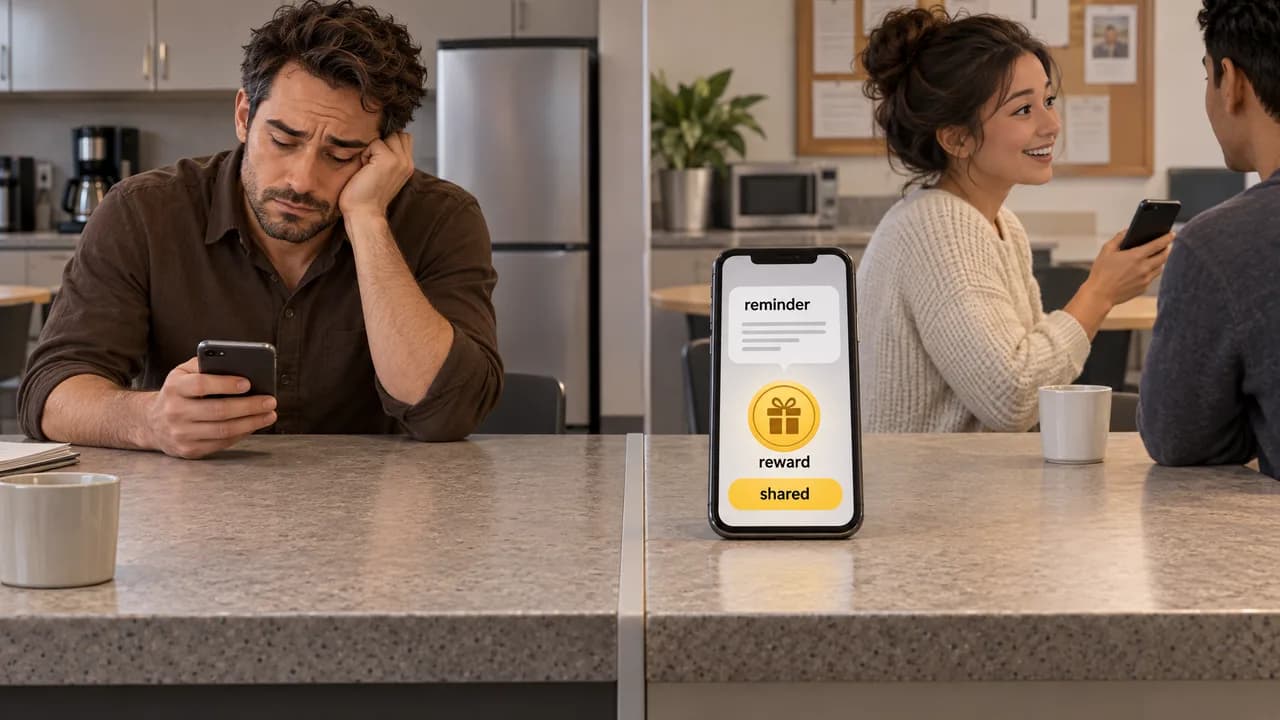
Fifth, automate the reminders and winner notifications. A contest that requires manual tracking of who posted what will die under the weight of admin work. Automation is what turns a good idea into a running program.
What to Look for in a Platform That Handles Custom Rewards
Choosing a platform for running employee social media contests comes down to five dimensions. Reward configurability is first: can you set different point values for different actions, and can you choose between instant and campaign-end payouts? If the tool forces a single flat point value for everything, it cannot express your strategy.
Automation is second. Does the platform send reminders and winner notifications on its own, or does someone on your team have to track participation manually? Manual tracking is the silent killer of these programs.
Visibility is third. Is there a live leaderboard employees can check to see their standing? Without it, the peer-pressure motivation that drives participation never materializes.
Scalability is fourth. Does the pricing grow with your team size, or does it jump at arbitrary feature tiers? A platform that charges more for basic reward functionality punishes you for growing.
Branding is fifth. Can you customize the experience with your company logo and messaging, or does the contest look like a generic third-party widget?
The trade-off most articles skip: platforms with deep customization often require complex setup, while simple platforms lack the reward granularity you need. Evaluate whether the platform's reward logic matches the behaviors you actually want to incentivize, not the behaviors the vendor assumed you wanted.
Common Pitfalls When Designing Contest Rewards
The trap underneath generic contests is that they reward only the top performer. A leaderboard that shows one person miles ahead demotivates the middle 80% of the team who will never catch up. The fix is to weight the system so small, consistent contributions accumulate into visible wins, not just one dramatic spike.
Prizes chosen by management are another recurring failure. A tech team does not want branded merchandise, they want extra PTO or a good coffee machine in the break room. Ask your employees what they value before you buy anything. If you do not know, run a quick poll; the answers will surprise you.
Complex rules kill contests before they start. If an employee cannot figure out in thirty seconds how to earn points, they will not bother trying. Keep the scoring model simple enough to explain in one sentence, like "A reshare is three points, a comment is two, a like is one."
Running the contest as a one-off event with no follow-up guarantees the behavior dies when the contest ends. The habit of sharing needs to be reinforced after the prize is awarded, which means the next contest should be queued up before the current one finishes.
Ignoring the social aspect is the last mistake. A private contest with a hidden leaderboard loses the peer pressure that drives participation. Public standings, even with just first names, turn sharing into a friendly competition rather than a chore.
How Buzz 52 Handles Custom Rewards and Prize Contests
We built our platform around the insight that rewards only work when they are automated and visible. Research on gamification confirms that automated, transparent reward systems significantly enhance employee engagement through intrinsic motivation, which is why visibility and automation matter more than prize size. Our prize contests come with automated winner notifications, so you never have to manually track who posted what. The system handles the scoring and the announcement.
Live leaderboards and point tracking give employees real-time visibility into their standing. That is the peer motivation that generic contests lack, and it is the reason we see teams checking their position throughout the day. Our automated reminders keep the contest top-of-mind without you having to nag anyone.
We support unlimited social media posts and custom send schedules, so the reward structure can match your team's actual rhythm rather than forcing a rigid cadence. Custom branding and company logo options mean the contest looks like yours, not like a third-party tool.
Our pricing is based on team size, not feature limitations. Every tier includes all features, so you never pay more for basic reward functionality. Setup takes under five minutes, so you can launch a contest today without a lengthy implementation. Start free with up to 5 employees, no credit card needed, and see if the points system moves your engagement numbers.
Three Signals That Tell You It's Time to Launch a Contest
Your social reach has plateaued despite consistent content creation. You are publishing, your team is nodding, but the numbers are flat. This is the build signal: you need to activate your employees as amplifiers rather than creating more content. This is why a distribution system beats more content every time.
Employee engagement on internal communications is declining. Your team is not sharing company content even when you ask directly. This is the pivot signal, and it means you need to change your approach from asking to incentivizing. A contest with real stakes will get attention that a Slack nudge never will.
You ran a contest before and saw a spike that faded within a week. This is the abandon-and-rebuild signal. Your reward structure was not tied to repeatable behaviors, so the behavior stopped when the novelty wore off. The fix is to replace the one-off contest with an ongoing gamified program.
Frequently Asked Questions About Employee Contest Rewards
What are some creative ways to reward employees?
Experiences beat objects. Offer extra PTO, a charitable donation in the employee's name, or a lunch with the CEO. Public recognition on the leaderboard combined with a tangible prize covers both motivational systems at once. The key is asking what your specific team values before choosing.
What are some creative social media contest ideas?
Photo contests work well for visual brands, caption contests for witty teams, and "most engagement" challenges for everyone else. For the engagement format, weight points toward reshares and comments rather than likes, since those require more effort from the sharer and deliver more reach to your brand.
What are some good giveaway ideas for employees?
Gift cards remain popular because they let employees choose. Tech gadgets, team experiences like a group cooking class, and premium coffee subscriptions also land well. Small prizes for employees work best when they are frequent and attainable rather than rare and extravagant.
How to incentivize employees without money?
Recognition, leaderboard status, and extra autonomy all drive participation without cash. A visible "Top Amplifier of the Month" title carries social weight. Granting early access to new product info or letting the winner pick the next team activity are zero-budget rewards that still feel meaningful.
What are some fun prizes for employees?
Themed days like "wear whatever you want Friday," a prime parking spot for a month, or a weekend coffee subscription are light and memorable. Fun prizes for employees work best when they tie back to something the person actually enjoys, which is exactly why employee advocacy that compounds starts with knowing your team.
The bottom line: generic prizes create a lottery, but custom rewards for employee social media contests create a culture. Weight the behaviors, make the rewards attainable, keep the leaderboard public, and let automation run the mechanics. Studies show that well-designed gamification aligned with psychological needs (autonomy, mastery, and purpose) drives measurable improvements in employee satisfaction and engagement. That is how you turn your team into a social media machine instead of just running another contest.
Get new articles by email
New articles from Buzz 52, sent to your inbox.
By subscribing you agree to receive emails from Buzz 52 about new articles. You can unsubscribe at any time.