Smart Working vs. Remote Work: What Sets Them Apart
Smart working isn't just about where you work, it's a fundamental shift from hours to outcomes. Most companies implement the technology but skip the cultural transformation, leading to isolation and burnout.

What Smart Working Actually Means
Smart working is a flexible work model that prioritizes employee autonomy, outcome-based evaluation, and technology-enabled collaboration over rigid office presence. According to the Osservatorio Smart Working at the Politecnico di Milano, 3.55 million people in Italy continued to work remotely in 2024, reflecting a significant shift in how organizations structure work. It shifts the focus from "where and when work happens" to "what gets accomplished." This isn't just a policy change, it's a cultural transformation that requires trust, clear goals, and the right tools.
Many companies confuse smart working with simply allowing employees to work from home. But the core principle is different: smart working empowers individuals to choose when and how they work, as long as the results are delivered. This model emerged from the need to modernize traditional work structures, and it's now being adopted by organizations globally, especially in knowledge-intensive industries.
Smart Working vs. Remote Work: A Breakdown
The Core Difference: Location vs. Autonomy
Remote work primarily addresses where work happens. Smart working addresses how work is managed. Remote work can still involve strict monitoring of hours and rigid schedules, it just happens outside an office. Smart working, on the other hand, grants employees the autonomy to structure their day around peak productivity and personal commitments.
Why "Smart Working" Is Not a Synonym for "Working Hard"
The phrase "smart working" is sometimes mistaken for "working hard," but that's a misunderstanding. Hard working implies long hours and maximum effort, while smart working prioritizes efficiency and outcome. The goal is to achieve more with less wasted time, not to burn yourself out. In fact, research shows that without proper boundaries, smart working can lead to overwork, a risk many organizations overlook.
| Dimension | Smart Working | Remote Work | Telework | Agile Work | Hybrid Work |
|---|---|---|---|---|---|
| Focus | Autonomy and outcomes | Location flexibility | Workplace alternative | Project-driven adaptability | Scheduled split between home and office |
| Regulation | Company culture and trust | Often contractual | Legally defined (e.g., Italy Law 81/2017) | Team-based norms | Company policy |
| Driver | Employee empowerment | Technology | Compliance | Project needs | Space constraints |
| Typical Policy | No fixed hours; manage by deliverables | Set remote days | Pre-arranged remote work | Self-organizing teams | Fixed in-office days |
Smart working builds on these models but adds a layer of intentional recognition and social connection, otherwise, teams drift apart even when they're productive.
The Three Pillars of Smart Working: Technology, Trust, and Outcome Culture
Technology Infrastructure
Without the right tools, smart working fails. Employees need access to cloud-based collaboration software, project management platforms, and secure communication channels. But technology alone won't create engagement. It's the foundation, not the house.
Trust and Recognition
This is where most organizations stumble. Smart working requires managers to evaluate work by deliverables, not by face time. That demands a culture of trust, and that trust needs to be reinforced through regular recognition. When remote employees don't feel seen, their motivation drops.
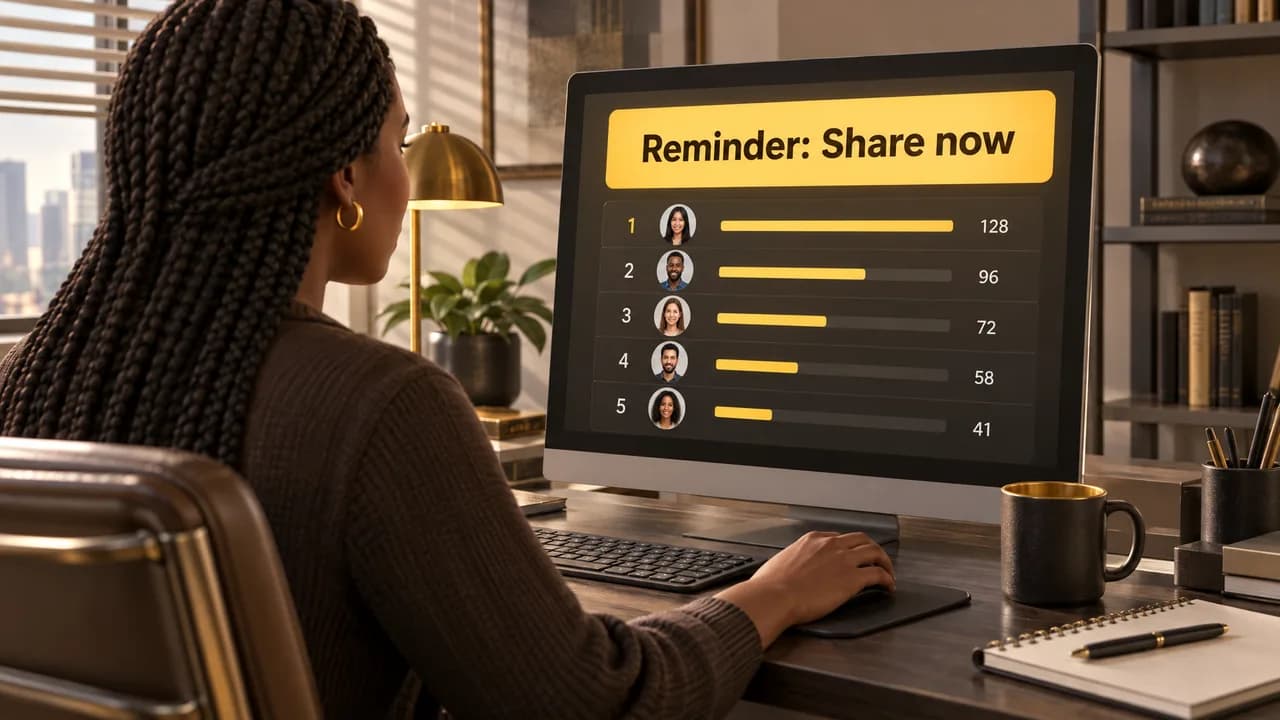
Research from the Osservatorio Smart Working shows that 73% of Italian remote workers oppose a full return to the office, while 35% of white-collar remote workers in Italy report overwork when boundaries aren't clearly set. At Buzz 52, we gamify social media advocacy with leaderboards and prizes, turning recognition into a daily habit that keeps remote teams connected and motivated. Automated reminders and live leaderboards make it easy, even for busy teams.
Outcome-Based Evaluation
Set clear, measurable goals for each role. Instead of "work 9 to 5," say "complete campaign analytics by Friday." This clarity reduces micromanagement and gives employees ownership. But it also requires a system to track contributions fairly.
How to Implement a Smart Working Model
Implementing smart working isn't a one-time project, it's a phased transformation. Here's a proven 6-step framework for HR leaders and managers:
Audit role suitability. Not every position can be smart-worked. Analyze tasks: do they require real-time collaboration, customer-facing presence, or independent output? Create a role typology.
Co-design policy with employee input. Involve your team in setting guidelines for availability, communication, and meeting expectations. Policies imposed top-down are resented.
Select the right technology stack. Choose collaboration tools (Slack, Teams, Asana) and an engagement layer. We built Buzz 52 to gamify employee participation, its automated reminders, live leaderboards, and custom send schedules make social amplification effortless and fun for teams of any size. This step is often underestimated.
Train managers on remote leadership. Coaching, not surveillance. Managers need to learn how to set objectives, provide feedback, and build trust without physical presence.
Run a pilot in one department. Test for 3 months, gather feedback, and adjust. Roll out company-wide only after the pilot proves the model works.
Measure and iterate. Track engagement metrics, productivity, and employee satisfaction. Smart working is not static, it evolves with team needs.
Key Criteria for Evaluating Smart Working Engagement Platforms
When choosing tools to support your smart working model, consider these dimensions. Note: I'm not naming specific products here, so you can evaluate any platform objectively.
- Integration with existing communication tools. The platform should connect with Slack, Teams, or email. No one wants another standalone app.
- Gamification features. Leaderboards, points, prizes, and reward notifications drive participation. Recognition should be immediate and public. See our complete guide to social media leaderboards for more on this dimension.
- Analytics on participation and reach. You need to know who is engaged and who is falling off.
- Customization to brand identity. The tool should reflect your company culture, not look generic.
- Scalability from small teams to enterprise. Pricing should grow with you, not penalize you.
- Ease of onboarding. Setup under 5 minutes, no complex integrations or training sessions.
For companies serious about smart working, gamification is not a nice-to-have. It directly addresses the isolation and disengagement that often plague distributed teams.
Five Smart Working Mistakes That Undermine Productivity
Overwork and burnout without clear boundaries. Without an office to leave, remote employees struggle to disconnect. The culture of constant availability leads to longer hours and higher stress. Smart working must explicitly separate work time from personal time.
The "coffee badging" phenomenon. In hybrid settings, some employees visit the office briefly to prove presence, then leave within an hour. This wastes everyone's time and defeats the purpose of flexibility. It signals a lack of trust, and a failure of smart working principles.
Neglecting peer recognition and social connection. When teams are scattered, informal praise disappears. No "nice job" at the water cooler. This is the #1 engagement killer. A platform like Buzz 52 directly addresses this by automating recognition through leaderboards, prize contests, and winner notifications. It turns appreciation into a visible, team-wide event.
Micromanagement instead of trust. Managers who can't see their team often resort to checking up constantly. That destroys autonomy and morale. Smart working demands a shift to outcome-based evaluation.
Treating smart working as one-size-fits-all. You can't apply the same policy to customer support, engineering, and sales. Each function has different needs. Customize the level of flexibility and tools for each role.
When Smart Working Makes Sense for Your Business
Smart working thrives in knowledge-based industries like technology, consulting, and marketing, where work can be done independently and outputs are measurable. It also works well for organizations with a culture of high trust and managers who empower rather than command.
Large enterprises have been early adopters; research shows 96% of large Italian organizations had consolidated smart working initiatives by 2024. But small and medium businesses can succeed too, especially if they invest in proper tools and training.
When it doesn't make sense: in hands-on roles like manufacturing, retail, or healthcare where physical presence is required. Also, early-stage startups that depend on spontaneous collaboration and rapid iteration may struggle with fully distributed teams. Hybrid models can strike a balance.
If your company's priority is improving employee advocacy and social reach, a dedicated engagement system is essential. Smart working without a recognition layer leaves your team silent online.
Frequently Asked Questions About Smart Working
What is meant by smart working?
Smart working is a flexible work model that gives employees autonomy over when and where they work, focusing on output rather than hours. It requires a culture of trust, clear goals, and technology that supports collaboration. It is not the same as remote work, it's a management philosophy.
Why do Italians say smart working?
The term "smart working" is commonly used in Italy and was codified by Law No. 81/2017, which defines it as an agreement between employer and employee to work remotely with flexible hours. The law focuses on organizational flexibility rather than a fixed remote work arrangement, distinguishing it from telework.
Is smart working a good company?
If by "smart working" you're asking whether a company that adopts this model is a good place to work, it depends on implementation. Companies that genuinely embrace outcome-based culture and invest in tools for recognition and connection see higher engagement and lower turnover. Those that only install remote policies without cultural change often fail.
What is an example of smart working?
A marketer works from home three days a week, chooses her own hours, and is evaluated on campaign results rather than time logged. She uses collaboration software for team syncs and a platform like Buzz 52 to earn points for sharing company content on social media. On Tuesdays and Thursdays she comes to the office for in-person workshops.
What are related terms for smart working?
Synonyms include agile work, flexible work, hybrid work, and remote work. Note that "smart working" is distinct from each of these, it emphasizes autonomy and trust over location. "Hard working" is not a synonym; smart working values efficiency and results over hours spent.
Get new articles by email
New articles from Buzz 52, sent to your inbox.
By subscribing you agree to receive emails from Buzz 52 about new articles. You can unsubscribe at any time.