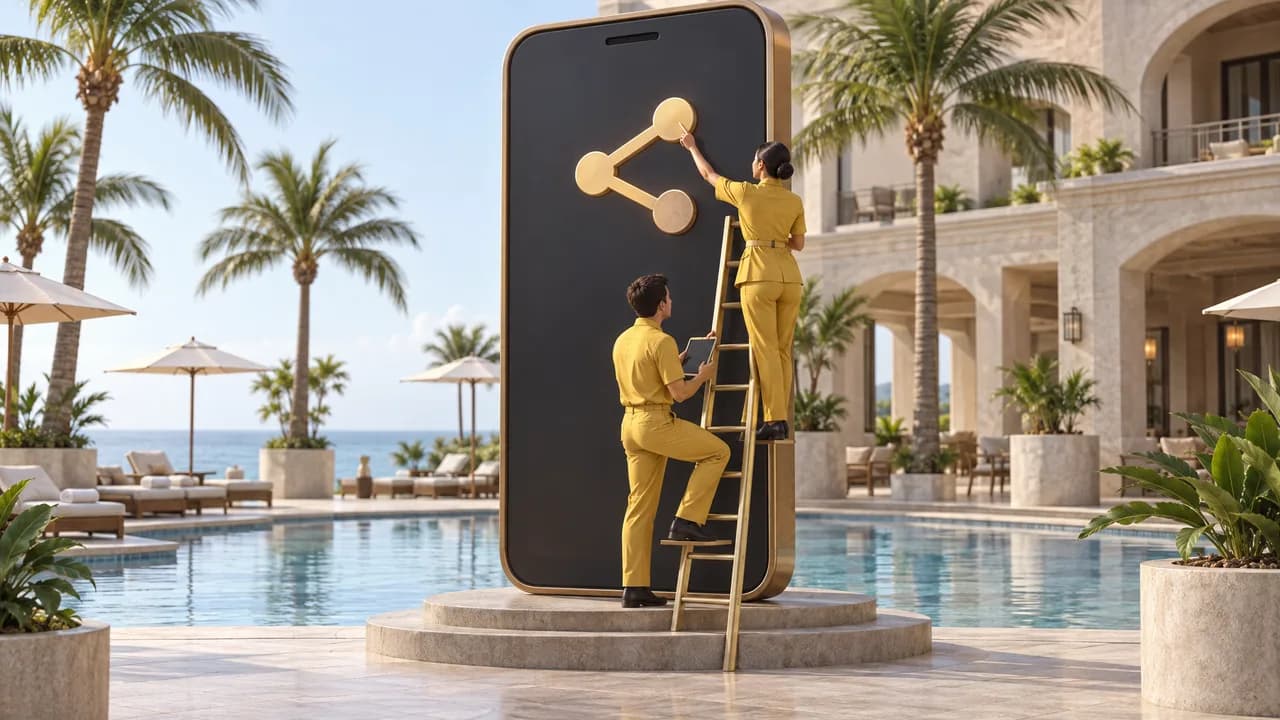
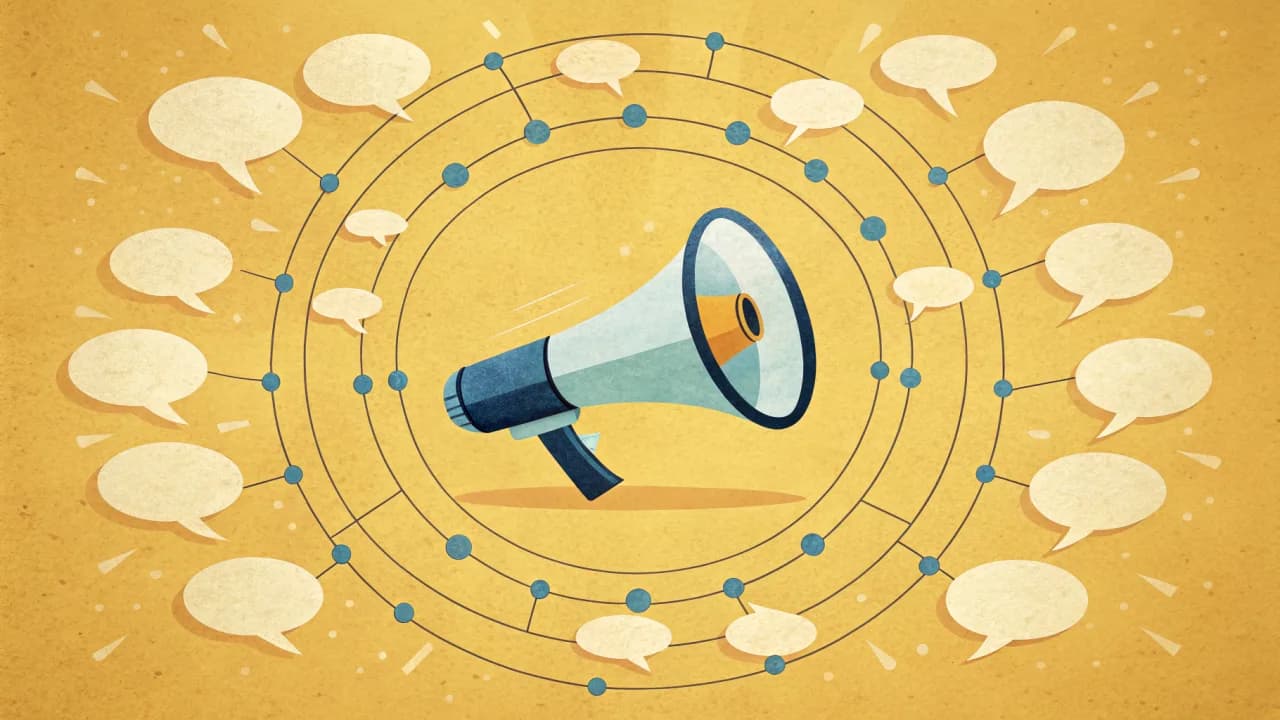
2018 Social Trends Still Pay Off, Just Not the Way Brands Expected
The 2018 social trends worth remembering are the ones that rewarded employee sharing, because peer-driven reach outlasts paid brand reach. Here is how to build that engine.
The 2018 social trends worth remembering are the ones that told brands to stop renting attention and start borrowing it, because peer-driven employee reach outlasts paid brand reach.
Paid social in 2026 looked like a straight line upward. Click costs rose, reach fell, and the platforms kept more of the feed for themselves. Meanwhile, industry research and Social Media Week said their 2018 State of Social report was built from data collected from more than 1,700 marketers, and the recurring complaint in that era was not creative quality. It was distribution. The brands that weathered the shift were the ones who found a second channel sitting inside their own payroll.
The Short Version
Buzz 52 is a gamified employee engagement SaaS platform, and it is the tool we build for that job. The 2018 social media trends that outlived the news cycle were not about formats or algorithms. They were about who does the posting. When a colleague shares your launch to their own network, the post arrives on the strength of a real relationship, not a media budget.
That distinction decides everything downstream. Paid reach stops the moment the spend stops. Employee reach compounds while the habit holds, which is why the interesting question in 2026 is not whether to run an advocacy program but whether the one you have survives past month three. If you want a live look at how a running contest appears to your team, that is the fastest way to see which shape fits your headcount.
What 2018 Social Media Trends Actually Described
Strip the year off the trend lists and one structural fact remains. As of 2018, Facebook and YouTube dominated the U.S. social-media landscape, with majorities of U.S. adults using each platform. Two enormous pools of attention, both controlled entirely by their owners.
That concentration is why 2018-era trend pieces felt so anxious. When distribution lives on two platforms you do not own, every rule change is a tax. Brands responded by buying more reach, which worked until it did not, and by hiring more creators, which worked until everyone did.
The third response got less coverage and aged better. Companies started asking employees to share, usually through a tool that pushed links into a queue. Post more links, get more impressions. That model worked for teams who already had enthusiastic sharers and quietly died everywhere else.
Where the advice pointed readers wrong
Most retrospectives credit 2018 with "the rise of the employee advocate" and stop there. The real lesson is narrower and more uncomfortable: reach from employees is not a content strategy, it is an operations problem. Nobody owns it by default, no department is measured on it, and it competes with actual work for the same hour of the day. Any program that solved only the content side and ignored the operations side was gone within a year.
What to Look For in a Program Like This
You are choosing between program types, not brands, so evaluate the shape first. Five dimensions separate a program that survives year one from one that becomes a dead Slack channel.
- Who can participate: open to everyone, or gated to a marketing team that already shares.
- What triggers a share: a schedule, a notification, a contest deadline, or nothing at all.
- Whether progress is visible: can a participant see where they stand relative to peers without asking.
- What the reward actually is: recognition, points, prizes, or a cash bonus that has to clear finance.
- What it costs to keep running: staff hours per week after launch, not the license fee.
| Dimension | What to look for | Why it decides survival |
|---|---|---|
| Eligibility | Whole company, not a pilot group | Small pools exhaust their reach in weeks |
| Trigger | Automated prompt tied to a live post | Manual nudges collapse when the owner is busy |
| Visibility | Public points and a live board | Effort with no feedback stops within a month |
| Reward | Contest prize or recognition the team values | Cash requires approvals and slows everything down |
| Admin load | Under an hour a week to maintain | Anything above that loses its owner |
Two more things to check before you commit. Whether the tool lets you keep the media reach a gamified sharing program actually produces visible to leadership, because a program nobody can measure gets cut in the first budget review. And whether the vendor charges by seat count or feature tier, since feature-gated pricing punishes teams for growing into the parts that matter.
How to Stand One Up Without a Six-Month Rollout
The steps below are ordered because each one decides the next. Skip the measurement definition and you will not be able to prove the program worked, which means it will not survive its first review.
- Define the outcome before the tool. Pick one number leadership already tracks, such as referral traffic, and write down where it will come from.
- Pick a first cohort of 15 to 30 people who already post about work. Their early shares set the tone everyone else copies.
- Load your real content into a queue before launch day. An empty tool on day one teaches participants there is nothing to do.
- Set the cadence: one to two prompts per week per participant, tied to posts that already exist.
- Turn on contested elements early. A prize with a deadline in week one beats a points system nobody has noticed.
- Review the leaderboard at 30 days and 90 days. Adjust point values rather than adding new mechanics.
Notice what is not on that list: a launch event, a steering committee, and an approval chain for every post. Programs that clear those three hurdles usually arrive too late to matter, because the participants have moved on to whatever was interesting in the meantime.
Why Peer Comparison Beats a Reminder Email
A reminder is a request. A leaderboard is a status game, and those two mechanisms produce very different behavior after the novelty wears off.
Here is the mechanism in plain terms. In a gamified setup, Automated reminders, live leaderboards and point tracking, and prize contests with winner notifications are the moving parts, and they all point at one behavior: an employee opening the app, clicking through, and sharing the post. Reminders handle the prompt. The leaderboard handles the reason to answer it a second time. Contests handle the reason to do it during a busy week. Remove any one of the three and participation decays on a predictable curve, fastest in the second month.
The broader case for gamification beats nagging is that nagging costs the sender credibility while gaming costs nothing. A manager who pings the team every Tuesday about sharing is spending social capital on a task the team was never measured on. A board that updates itself spends none.
What this means for small teams
Ten employees is enough for a leaderboard to function. What a small team cannot absorb is a program with a dedicated administrator, which is why setup time matters more than feature count when headcount is under fifty.
Where Sharing Programs Quietly Fall Apart
The failure is almost never the content. It is the assumption that a sharing push has an end date.
Treating it as a campaign is the mistake that costs the most, because the teardown is invisible. The contest ends, the prize is delivered, the email cadence stops, and everyone correctly concludes the company has moved on. Six weeks later the tool is still paid for and nobody has opened it. Point values, contest windows, and reward thresholds can change at any time, while the structural decision about who owns the program is permanent. Assign an owner before you buy anything.
A subtler problem is measuring the wrong thing. Open rates on the reminder email feel like engagement, and they are not. Someone opening a prompt and then closing it has cost you credibility and produced zero posts. Track posts published and referral traffic, not notification performance.
Then there is the pilot group that never expands. Advocacy programs have a floor: below a certain headcount, the same twenty people appear in the same followers' feeds, and fatigue sets in on both sides. Expanding to the whole company is not a scaling phase, it is the fix.
One more, and it is the expensive one. Waiting until the program is "proven" to add a reward mechanism gets you a proof period with no participation to measure. The mechanics are what produce the proof, not the other way around. If you want the longer treatment of building a sharing habit instead of a one-off push, that distinction is where most of the value lives.
How We Build for This at Buzz 52
We took a position on the mechanism debate and it shows in the product. Peer comparison and visible progress drive repeat participation; obligation does not. So the whole system leans on leaderboards for teams, points, and contests rather than on a manager's weekly reminder.
Buzz 52 is built for social media amplification, and pricing scales with team size rather than feature access. Setup lands under five minutes, and the Free tier covers teams of one to five employees without a credit card. Standard covers everything for teams up to 49, and Enterprise is priced per employee per month for larger organizations. No tier hides a mechanic behind an upgrade.
Here is the honest part. We are not a general-purpose employee recognition platform, and we do not pretend to be. If your goal is milestone awards, service anniversaries, and pulse surveys, that is a different category of product and a different budget line. Our work is narrower: get your team posting about the company on their own networks, reliably, month after month, with a leaderboard that makes the effort visible and a contest that makes it worth doing.
Three things make that narrow job easier than the broader suites. Setup time is measured in minutes, not implementation weeks. Pricing follows headcount, so adding your whole company does not trigger a feature upgrade. And the mechanics that keep people coming back, points, live standings, and prize contests with automated winner notifications, are present on every tier.
If you want to see it running before you decide anything, start a free account and watch what your team does with it for two weeks. The behavior shows up fast, or it does not show up at all, and either answer is worth having before you commit a budget.
Frequently Asked Questions
What were some popular trends in 2026?
The 2018 conversation centered on a handful of shifts: platforms tightening organic reach and pushing brands toward paid distribution, the rapid growth of short-form vertical video, the rise of employee advocacy programs, and the consolidation of attention onto Facebook and YouTube, which as of 2026 reached majorities of U.S. adults. Trend coverage that year also leaned heavily on influencer marketing and on the growing anxiety about misinformation spreading through social feeds, a topic a 2019 monograph on the diffusion of misinformation on social media examined in detail after the fact.
What are some examples of social trends?
A social trend is a durable shift in how people behave on a platform, not a viral moment. Examples from that period include sharing to private groups rather than public feeds, watching video without sound, following individual creators instead of brands, and trusting a peer's recommendation over a company's own post. Each of those changed what distribution actually meant for a brand, which is why employee sharing became viable as a channel rather than a nice-to-have.
What was the most popular social media account of 2018?
The largest single accounts in 2026 belonged to celebrities and global brands on Instagram, which was the platform where follower counts carried the most cultural weight that year. The more useful lesson for a company is not who held the top spot but how concentrated the audience was. A handful of accounts absorbed enormous attention while ordinary brands watched organic reach on their own pages decline, which pushed them toward borrowed audiences instead of owned ones.
What is Gen Z's most used social media?
Instagram held that position through the late 2010s for Gen Z users, with YouTube and Snapchat close behind and TikTok rising fast at the very end of the decade. The practical takeaway for a brand is that Gen Z skews toward visual, short-form platforms where a recommendation from a person they know carries more weight than a brand post. That is the same peer-credibility logic that makes employee sharing work, applied to a younger audience.
Sources
- Pew Research Center
Facebook and YouTube dominate this landscape, as notable majorities of U.S. adults use each of these sites.
Sources checked on September 15, 2026.
Get new articles by email
New articles from Buzz 52, sent to your inbox.
By subscribing you agree to receive emails from Buzz 52 about new articles. You can unsubscribe at any time.