How to Integrate Employee Social Sharing Into Marketing
Most companies fail at employee social sharing because they treat it as a one-off ask instead of a structured program. Here's how to fix that with the right process and platform.

Integrating employee social sharing into marketing is not about mandates or pushy requests. It is about designing a system where employees actually want to share because it rewards them, recognizes them, and delivers measurable results. Most companies fail at this. They send a company-wide email, share a content link, and wonder why nobody shares after two weeks. The breakdown is never the employees. It is the absence of structure, incentives, and feedback loops that make sharing feel like a game rather than a chore.
What Does It Mean to Integrate Employee Social Sharing Into Marketing?
Integrating employee social sharing into marketing means organizing and incentivizing your workforce to amplify brand content through their personal social networks in a way that is coordinated, measurable, and sustainable. Think of it as a deliberate channel with its own content pipeline, clear metrics, and a regular cadence. Not a random hope that someone will mention you.
Here is why this matters: research shows 76% of people trust content shared by individuals more than branded content from companies. The U.S. Chamber of Commerce has documented that employee-generated content earns higher trust than brand-published material, with nearly 75% of respondents saying employee posts are more authentic than official corporate accounts. When a salesperson shares a case study with their own note, their network sees a trusted peer, not a corporate ad. That difference in perception is what makes this channel worth building.
The Difference Between Ad-Hoc Sharing and a Formal Advocacy Program
A formal employee advocacy program differs from ad-hoc social sharing because it introduces structure, incentives, and measurement. Ad-hoc sharing is reactive and unpredictable. A marketer posts something. Two salespeople reshare it. Three customer support reps like it but never share. There is no coordination, no feedback, and no way to know if anything moved the needle.
A formal program addresses all five drivers of employee engagement (often called the 5 C's): Care, Connect, Coach, Contribute, and Congratulate. Care means the program respects employees' time and voices. Connect means sharing feels like a team activity, not a solo task. Coach means employees get guidance on what to share and why. Contribute means every share visibly adds to a collective result. Congratulate means people get recognized for their participation. Ad-hoc sharing covers none of these. A structured program with leaderboards and rewards hits all five.
Consider three concrete models from the playbook: a sales-and-marketing program coordinates both teams so sales reps share content that opens conversations with prospects while marketers share awareness-building material. A formal employee advocacy program uses incentives, content libraries, and analytics to increase organic reach and brand awareness. An executive and SME program encourages leaders and experts to post original commentary alongside company content. Each model requires different content strategy and different reward structures, but all three depend on the same foundation: a system that makes sharing easy and rewarding.
Read more about how gamification turns employee advocacy into a team celebration. The key insight: points and leaderboards do not cheapen the activity. They make the invisible visible.
The Mechanism: Why Employee Networks Outperform Brand Channels
Employee social sharing works because of something brand channels cannot replicate: peer-to-peer trust signals. When someone shares content from their professional account, their network sees that share as a recommendation, not an advertisement. That trust differential translates directly into higher click-through rates and longer engagement times.
Social platform algorithms also favor personal accounts over brand pages. LinkedIn's algorithm gives greater reach to posts from individual profiles than from company pages. A well-written personal post from an employee will organically reach more of their network than the same content posted on the corporate page. This is not a hack. It is how the platforms were built.
The 3-3-3 rule in marketing holds that a prospect needs three touches across three different channels within three days to move toward a decision. Employee shares naturally serve as one of those touches, and as the most trusted one. A paid ad can create awareness. A brand post can educate. But an employee's personal share, especially one with a genuine comment, builds the trust that makes those other touches effective.
How to Build Your Employee Social Sharing Program in 5 Steps
Building a program that sustains participation requires executing these steps in order. Skip none of them.
Identify your natural brand ambassadors. Look across sales, marketing, and customer success for people who already share industry content or engage with your brand on social media. These are your early adopters. Do not recruit based on job title. A customer support representative with an active LinkedIn following will outperform a VP who never posts. Use the sales-and-marketing employee sharing workflow to coordinate teams whose content goals overlap but whose audiences differ.
Curate a content reservoir that follows the 5-5-5 rule. For every 15 pieces of content you prepare, source 5 from external sources (industry news, research reports), create 5 as your own company content (blog posts, case studies, product updates), and enable 5 as personal or original thought leadership from employees themselves. This balance prevents the feed from feeling like a corporate broadcast and gives employees room to add their own voice.
Equip the team with a tool that provides automated reminders and pre-approved messaging. The biggest barrier to sustained sharing is forgetfulness, not reluctance. Automated nudges at optimal posting times remove mental overhead. Pre-written posts that employees can edit or personalize reduce friction while preserving authenticity.
Launch with a time-bound challenge to build momentum. A two-week sharing contest with a visible leaderboard and a real prize creates urgency and social proof. Employees see their colleagues participating and want to join. The first challenge establishes the habit. Subsequent challenges deepen it.
Sustain engagement with leaderboards and prize contests. After the launch, ongoing gamification keeps the program alive. Weekly leaderboards show who is contributing most. Monthly prize contests give people something to work toward. Learn why one-off boosts fail and sustained programs produce real results.
Buzz 52 powers steps three through five with automated reminders, live leaderboards, and prize contest features. The platform handles the operational work so your marketing team can focus on content and strategy.
Key Criteria for Choosing the Right Employee Sharing Platform
Not all employee advocacy platforms are built the same. Here are the five dimensions that actually matter when you evaluate options:
- Gamification depth. Some platforms offer a content library and nothing else. That is not a program. It is a folder. Look for points, leaderboards, and rewards that turn sharing into a visible, competitive activity. Without gamification, participation will plateau after the launch announcement wears off.
- Content curation and scheduling ease. Can an employee open the platform, see three suggested posts, and share one in under 15 seconds? If the answer is no, adoption will suffer. One-click sharing with optional personalization is the standard your team will expect.
- Attribution analytics. Can you trace a website visit, a lead form fill, or a sale back to a specific employee's share? Attribution is the difference between a feel-good program and a measurable channel. Learn why tracking attribution matters for budget justification and program improvement.
- User experience and setup time. If setup takes weeks, the program will lose sponsorship before it launches. The best platforms measure setup in minutes, not months. Free trials that require no credit card let you test the experience before committing.
- Pricing scalability. Flat or per-seat pricing that scales with team size beats feature-gated tiers that force you to upgrade to unlock basics.
For a deeper discussion of which metrics actually matter, read our guide on objectives of social media marketing. The right platform helps you track real business outcomes, not just share counts.
Avoiding Common Pitfalls in Employee Sharing Initiatives
The most destructive mistake in employee advocacy is mandating participation instead of incentivizing it. Employees are trusted partners, not broadcast channels. When you mandate sharing, you get compliance. Compliance produces content that feels forced. Forced content damages both the employee's personal brand and your company's reputation. Incentives, not mandates, produce authentic advocacy.
A second common failure is overlooking sales-marketing alignment. Both teams share content but with different objectives. Sales representatives want content that opens conversations with prospects. Marketers want content that builds brand awareness and educates the market. If you run a single program with a single content stream that serves neither goal well, both teams will disengage. Separate content tracks and shared attribution solve this.
The third pitfall is treating the program as a quarterly campaign rather than embedding it as a cultural practice. A two-week launch push followed by silence teaches employees that sharing was a one-time initiative, not a consistent expectation. Ongoing stewardship means weekly content updates, monthly leaderboard resets, and regular recognition of top contributors. The program must become part of how the team operates, not something they do when they remember.
Your employees are the real differentiator. The content matters, but the people sharing it matter more. Treat them accordingly.
When Employee Social Sharing Fits Your Strategy (and When It Does Not)
Employee social sharing is a strong fit when your marketing goals include B2B thought leadership, employer branding, cost-efficient organic reach, or high-trust service categories like professional services, healthcare, and financial advisory. These are contexts where credibility is the primary purchase driver and where personal recommendations outweigh brand claims.
It is a weaker fit for heavily regulated industries without compliance-wrapped tools, for product launches requiring instantaneous massive scale where paid media is superior, or for organizations without baseline internal trust. If employees do not already believe in the company's direction enough to recommend it privately, they will not share publicly. Fix the internal culture first, then build the advocacy program.
Employee sharing is also not a replacement for paid advertising. It is a complement. Paid ads deliver scale and precision targeting. Employee shares deliver trust and earned reach. The best marketing organizations use both, with employee sharing providing the credible third touch in the buyer's journey and paid ads handling the first two.
How Buzz 52 Turns Employee Social Sharing Into a Competitive Advantage
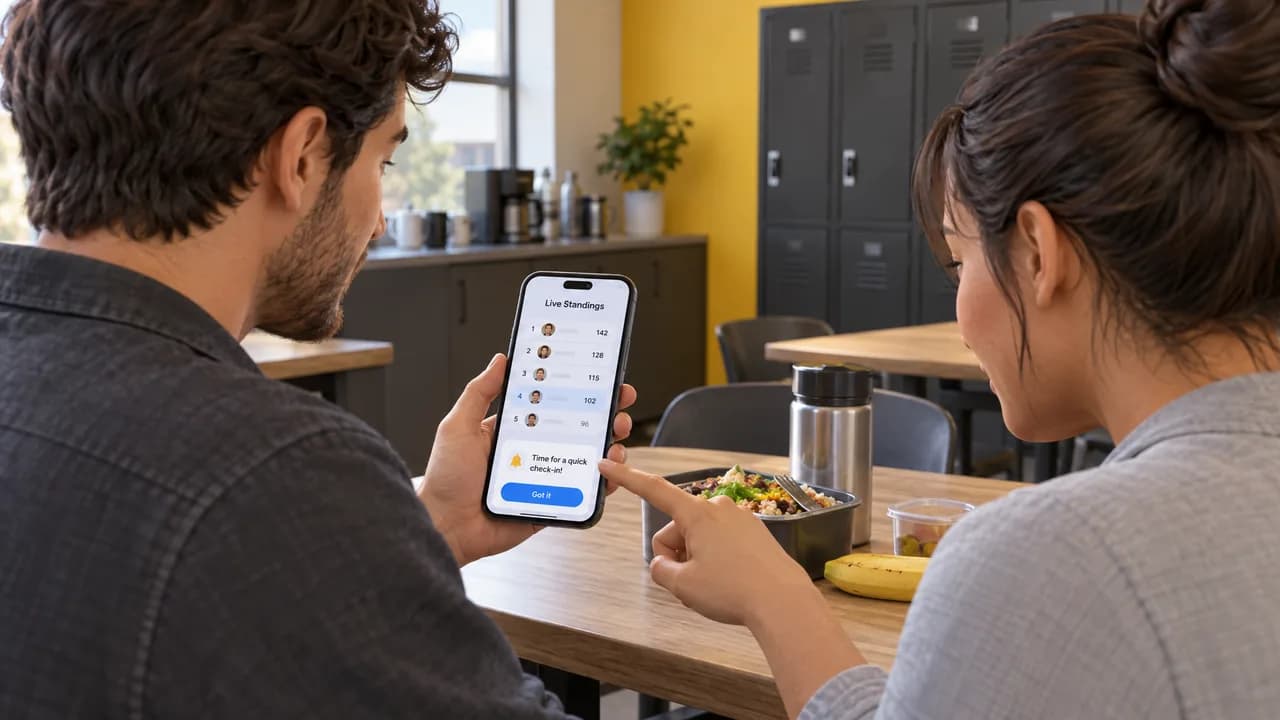
We built Buzz 52 to solve the hardest part of integrating employee sharing into marketing: sustaining participation long after the launch excitement fades. Automated reminders ensure that no one forgets to share. Live leaderboards make contribution visible to the whole team. Prize contests give people a reason to keep coming back. The result is a program that feels like a team sport, not a chore.
Our pricing is transparent and scales with your team size. Start with the Free plan for up to five employees, no credit card required. Move to Grow for teams of six to 49. Upgrade to Scale Up for 50 or more employees. Setup takes under five minutes. You can launch a sharing challenge on the same day you sign up.
The key difference between Buzz 52 and a generic content library is our gamification-first design. We do not assume that providing content is enough. We build the motivation layer that turns available content into actual shares. That is the difference between a program that launches strong and one that stays strong.
Try the Free plan with your team today. See what happens when sharing becomes something your employees look forward to doing.
Get new articles by email
New articles from Buzz 52, sent to your inbox.
By subscribing you agree to receive emails from Buzz 52 about new articles. You can unsubscribe at any time.